Aintree Grand National Betting: Odds and Places
 Available in US
Once a year, 13 million UK adults – most of whom never bet on any other race – place a slip on the Grand National. They pick by colour, by name, by jockey, sometimes by horoscope. The Aintree main race is the only fixture in British racing where betting volume outstrips everything else by an order of magnitude. And it is the only race where I have learned that knowing the form is roughly the third or fourth most useful skill a punter can bring.
Aintree Betting Variables: Overcoming 34-Runner Variance
The Grand National sits outside every normal pattern of horse-race betting. Field size of 34 runners. Fences shaped like obstacles from a Victorian engraving. A four-mile-two-and-a-half-furlong test of stamina that punishes any horse not at its absolute peak. And a betting public composed mostly of people who only show up for this one Saturday.
The casual money distorts the books in ways that punters who know the form can exploit. Three-quarters of the people staking on the Grand National have no other betting record from the previous year. 51% pick a horse by name. 36% go by gut feeling. 14% pick by jockey silks colour. The rest mix horoscopes, sweepstake draws and accumulators built across the day’s card. What the market reflects is the weight of casual money, not the weight of considered form analysis.
For a serious punter, that creates inefficiencies. Horses with memorable names get backed too short. Plain-named runners with stronger profiles drift to better prices than the form merits. The bookmakers’ books are correctly calibrated for total liability but distorted at the individual horse level. You can find value if you look past the names.
The 34-runner field and how it bets
The maximum field of 34 changes the betting maths fundamentally. Most UK handicaps top out at 20-24 runners. The Grand National runs deep into the field, with most horses priced between 25/1 and 100/1. Even the morning favourite typically goes off between 6/1 and 10/1 – much longer than you would see for a comparable Class 1 handicap with a smaller field.
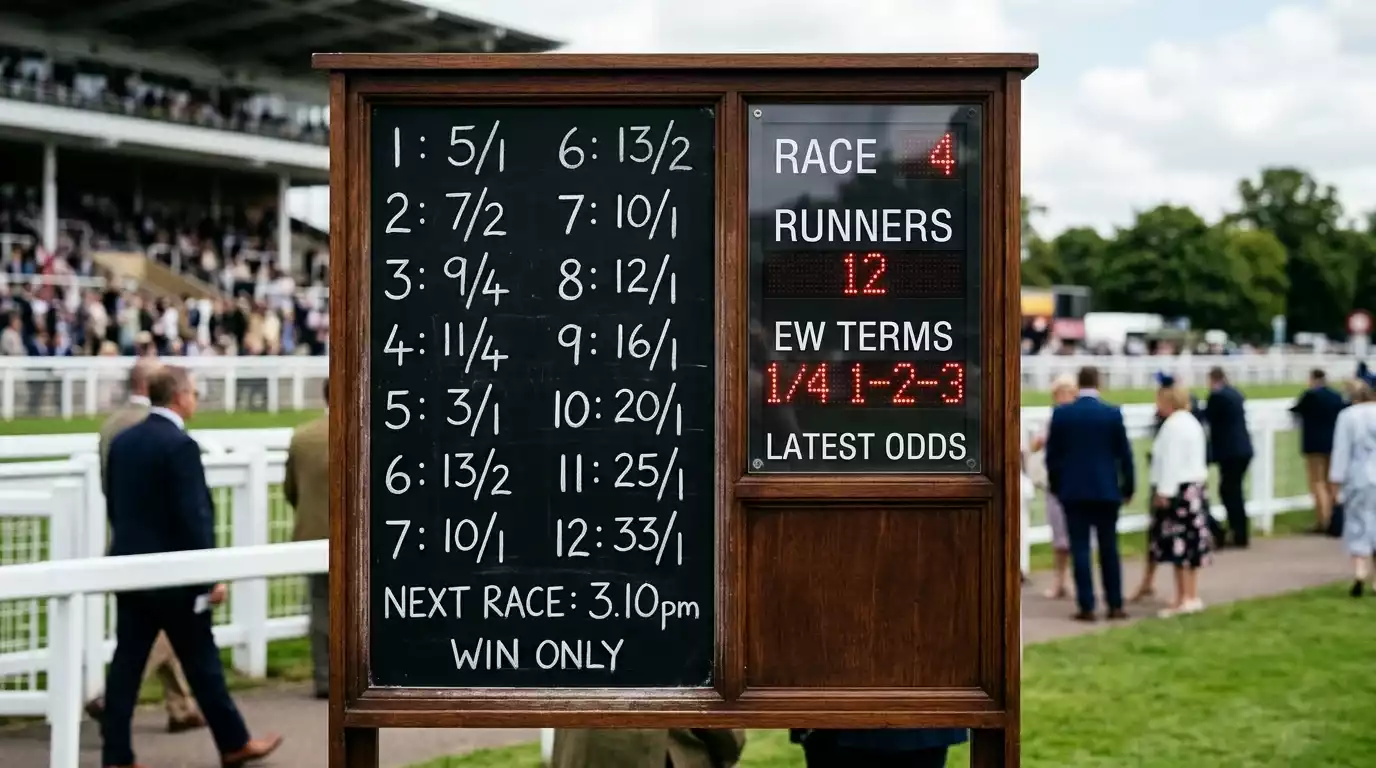
Field-size place terms reach their peak here. Most UK bookmakers pay six places on the Grand National, with one or two stretching to seven or eight places on the each-way side. The place portion of an each-way slip becomes proportionally more valuable than on any other race. A £5 each-way bet at 33/1 with six places at one-quarter the odds returns roughly £46 plus stake on a placed run, even without winning. That is the structural reason casual punters keep coming back – the each-way bet on the National is genuinely good value compared to other races.
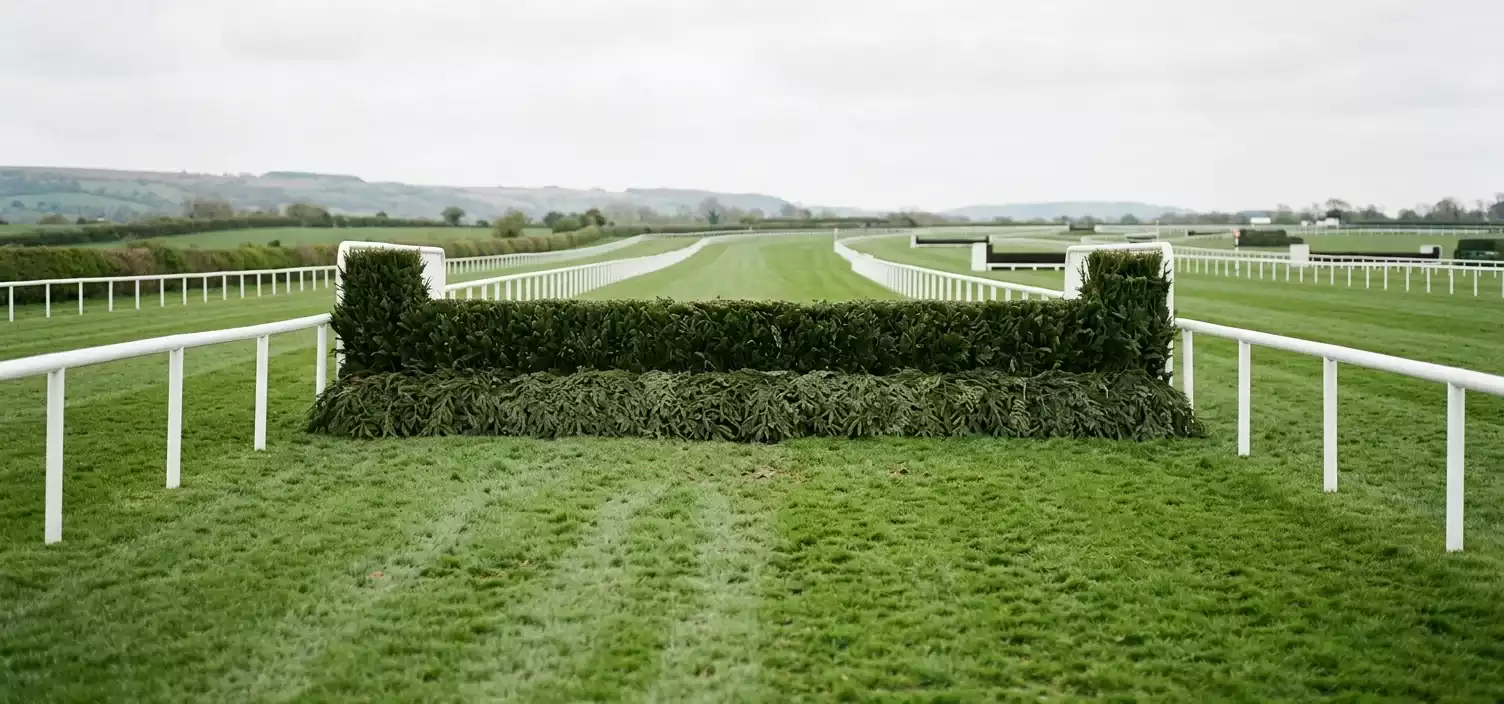
The 34-runner cap was reduced from 40 ahead of the 2024 running as part of the safety changes that followed several years of welfare review. Smaller field, modified fences, reduced run-up to the first – the race is structurally different from the National of even five years ago. The form book has not fully caught up with the changes, which is its own opportunity for punters who study course-specific suitability.
The casual money problem
13 million UK adults betting once a year is the figure that frames everything else. That is roughly a quarter of the adult population, and the vast majority of those slips are placed in betting shops or via online accounts on the Friday and Saturday morning before the race. The flow of cash is enormous and almost entirely insensitive to form, ground or stable confidence.
The behavioural breakdown comes from one of the larger surveys of casual Grand National punters. “Around 13 million adults bet on the National each year, but most of them have no other betting activity at any other point in the calendar. The market is driven by casual money, not by form analysis,” is how Richard Marsh at OLBG framed it in their annual survey. The phrase that matters is the second half – the market is driven by casual money. The implication for serious punters is that you are betting against an audience that is not reading the form. That is an advantage if you are willing to do the work.
The casual money concentrates on horses with strong names – Tiger Roll, Don’t Push It, Mon Mome, the runners whose names lodged in the public memory after a previous win or near-miss. Repeat performers from previous Nationals get backed too short. So do horses with celebrity owners or jockey storylines that ran in the previous fortnight’s media coverage. The names that win the National every year would, on average, give you a roughly 12% return if you bet £1 each-way on every horse that ITV mentions in their preview package.
Reading the form past the names
Serious analysis of the National starts with three filters that the casual market consistently undervalues. First, stamina – has the horse won or placed over 3m or further in good ground? The four-mile-plus distance is genuinely unique. Most horses in the field have run mostly between 2m4f and 3m1f, and the step up to 4m2f is decisive. Second, fence experience – has the horse jumped Aintree fences or schooled at the course? The modified fences are easier than the originals but still distinct from standard chase fences elsewhere in the UK. Third, weight on a high handicap mark – National handicaps go to high marks, and a horse rated 150 carrying 11st 7lb has a much harder task than a horse rated 142 carrying 10st 10lb.
The horses that win the National tend to be 8-10 years old, with at least one previous run at Aintree, a winning form line over 3m or longer in the previous season, and a handicap mark between 140 and 152. That is a narrow window, and it eliminates most of the field on paper. The casual market does not apply this filter. The serious money, when it shows up, often does.
The relationship between the Grand National and the broader handicap structure of British racing is worth understanding in detail – the official rating system is what determines who gets in the race in the first place, and the cutoff for entry shifts year on year.
Aintree as a course, not just a race
The Grand National is the headline event, but Aintree’s three-day meeting includes some of the best non-festival National Hunt racing of the year. The Aintree Hurdle, Topham Chase, Maghull Novices’ Chase and Liverpool Hurdle all carry strong fields and big betting volume. Punters who only bet on the National miss the meetings on Thursday and Friday, where the racing is often sharper and the books are tighter because the casual money hasn’t arrived yet.
Aintree attendance over the 2022-2025 period averaged around 70,000 across the three days for the National meeting, with the Saturday alone drawing close to 70,000. Broadcast audiences on Grand National Saturday peak at 8-10m UK viewers across ITV linear and ITVX streams, second only to England football matches in the live-sport calendar.
The mid-meeting cards are an opportunity. Casual punters wait for Saturday. Serious punters know that the Thursday and Friday cards include some of the sharpest National Hunt handicaps of the season, with full fields, competitive prices and the same BOG promotions that apply on the National itself. The betting books on those two days are noticeably tighter than the Saturday book because the punter mix is more form-focused.
The Saturday strategy
For most punters, the Grand National itself is a once-a-year ritual, and the strategy is more about not losing badly than about beating the book. A few practical rules, learned the hard way over a decade of National Saturdays.
Take each-way as the default. The Grand National is one of the very few races where the place portion genuinely pays well – six places at one-quarter the odds on a 25/1 shot is a £6.25 profit per £1 of place stake, before deductions. Win-only bets at long prices are a sucker’s game on a race where every horse has a credible jumping risk.
Spread your stakes. The 34-runner field means there is no single horse with a probability of winning above about 15%. If you back one horse for £20, you have most likely lost £20 in 85% of outcomes. Five horses at £4 each-way each gives you a 60-70% chance of cashing some return, even if the win does not come in. The expected value is similar; the variance is much lower.
Avoid the ante-post traps. Ante-post slips on the Grand National are void if your horse doesn’t run, and withdrawal rates in the week before the race are higher than at any other meeting. Wait for declarations, which finalise around 24-48 hours before the race, and bet into the firmed-up field rather than into the speculative ante-post market.
The race after the race
The Grand National Saturday is the single biggest day of the betting calendar, but the racing economy that depends on it extends well beyond the four-and-a-bit minutes of the race itself. Bookmakers report that 90% of new account registrations across April happen in the week of Aintree. Levy contributions from that single weekend run into the millions. The race is, for many casual punters, the only meaningful exposure to British racing they have all year.
The 2024 changes to the race – smaller field, modified fences, reduced casualty rate – were controversial within racing but have stabilised the National as a long-term commercial product. The audience continues to grow. The betting volume continues to grow. The casual money continues to drive the book. For serious punters, the day remains the single best opportunity in the calendar to find value against a market dominated by people who do not, on the whole, know what they are looking at.
Questions punters ask about Grand National betting
How many places do bookmakers pay on the Grand National?
Most UK-licensed bookmakers pay six places each-way on the Grand National with the place portion at one-quarter the odds. Some operators stretch to seven or eight places on the each-way side as a promotional offer, particularly for new account holders. The terms are visibly disclosed on the slip before confirmation.
Is each-way better than win-only on the National?
For most punters, yes. The 34-runner field means even strong fancied horses carry a meaningful risk of finishing fourth or fifth without winning. Each-way captures the placed positions and converts that risk into a payout, while win-only bets at long prices are a high-variance play that suits only punters with a large bankroll.
When is the Grand National 2026?
The 2026 Grand National runs at Aintree on Saturday 11 April as the headline race of the three-day Aintree Festival, which begins on Thursday 9 April. The full Aintree fixture and ante-post betting market open in January in most years and firm up sharply in the final fortnight before declarations.
Published by the Bets Horse Racing team.