Photo Finish and Stewards’ Enquiry: When Your Win Isn’t a Win Yet
 Available in US
Table of Contents
- The verdict that hasn’t happened yet
- How the photo finish actually works
- The stewards’ enquiry and how it changes results
- Weighed in: the moment the bet becomes real
- Positive samples and post-race disqualifications
- How tight finishes change the betting market
- Reading the result like the stewards do
- Common questions about result verdicts
I once stood in a betting shop watching the screen go from “Result: 1st No.7” to “Stewards’ enquiry” to “Result amended” inside ninety seconds. The winning slip in my pocket became a runner-up slip, then a placed slip after the enquiry promoted the disqualified horse’s second-place finisher into the win position. The £140 I thought I had won settled, eventually, as £42. Welcome to the part of British racing where the result is provisional until someone official tells you otherwise.
The verdict that hasn’t happened yet
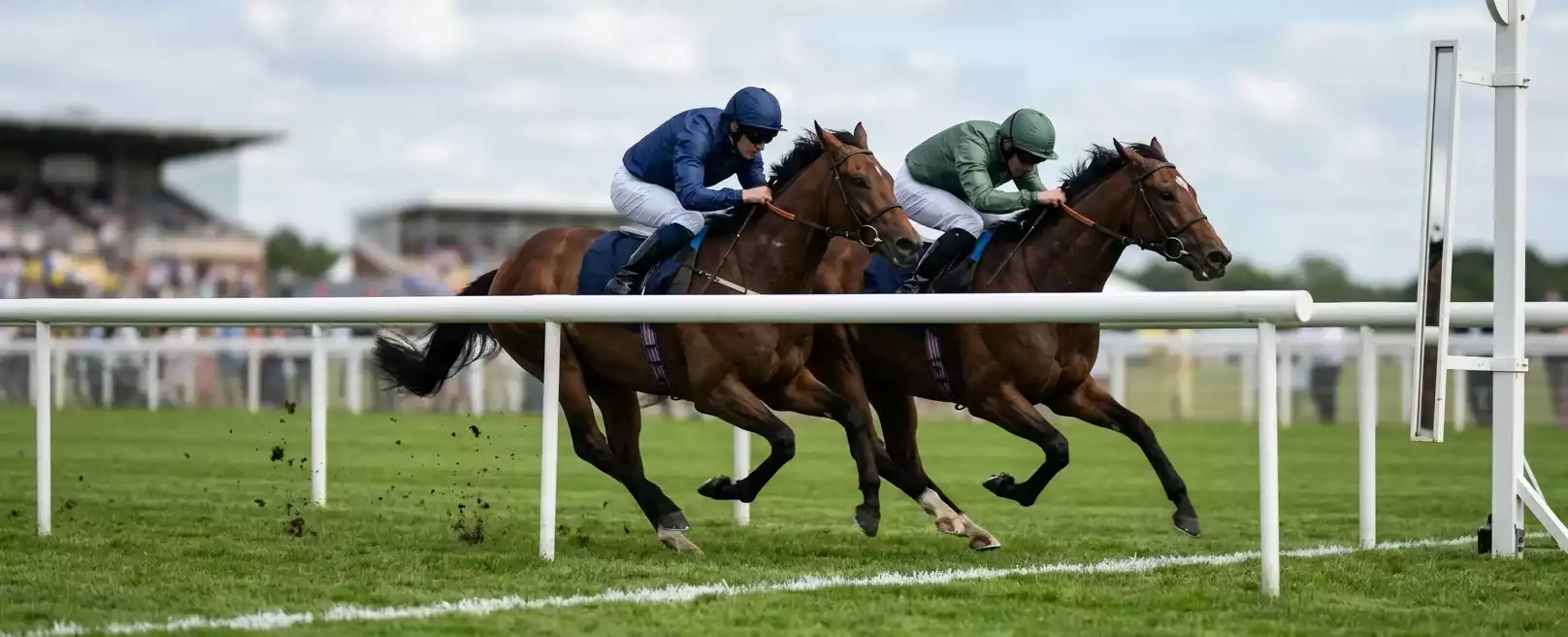
Most punters treat the photo finish as the dramatic moment at the end of a tight race. It isn’t quite that. The photo is the easy part – a high-speed camera at the finish line captures the order of nose-tips and the judge announces a winner within thirty seconds. The harder part is what happens when the result is queried for interference, a riding infringement, or a positive sample. That is where slips that look like winners can quietly become losers, hours or even days after the race.
The structure of British racing officialdom around results matters because it determines when your bet is settled and when you get paid. The judge declares the order of finish. The starter, stewards and clerk of the course all have input into whether the race ran cleanly. The British Horseracing Authority publishes the final verdict. Most of the time these layers agree quickly. Sometimes they do not.
How the photo finish actually works
The technology is a slit-scan high-speed camera positioned at the finish line, capturing several hundred frames per second across a thin vertical slice of the track. The resulting image is not a normal photograph – it is a composite of each horse passing through the finish-line plane at the moment of crossing, stacked horizontally to produce the familiar narrow strip showing nose-tips on a vertical reference line.
The judge interprets the image looking for the foremost part of the horse’s nose to cross the line first. Distances are measured in lengths or fractions – a head, a neck, a short head, a nose, or a dead heat where two horses cannot be separated. The British system uses standardised increments that map to about 8 inches per length when distance is converted from time at the finish-line speed.
Dead heats happen more often than punters expect – around 2-3 races per year at the top tier, with several more at lower levels. When two horses dead-heat for the win, both bets win at half the stake, which produces a half-payout return on each. The maths is straightforward but catches casual punters out – a £10 win at 8/1 in a dead heat returns £40 plus stake, not £80 plus stake.
The stewards’ enquiry and how it changes results
Stewards’ enquiries are called when the race officials suspect something happened during the running that may affect the result. Interference is the most common trigger – a horse drifting across another, causing it to check or lose ground. Whip overuse, dangerous riding, and improper jumping can also trigger enquiries. The stewards convene at the racecourse, watch the race footage from multiple angles, hear from the jockeys involved, and make a determination within twenty to thirty minutes.
The outcomes range from “no further action” to “disqualification and promotion”. A horse can be moved from first to second, or from second to first, by stewards’ decision. Riders can be banned for future fixtures, fined, or both. The Tattersalls Committee rule book on betting follows the official BHA verdict, so the bet settlement reflects whatever the stewards finally rule rather than the order across the line.
For punters, the practical effect is that any race with a tight finish, a marginal interference incident, or a long-stride exchange between two horses near the line carries enquiry risk. Bookmakers will not pay out on a winning slip until the official “Weighed in” announcement, which can be delayed by an enquiry. Most punters never notice because most enquiries are dismissed. But the slips do not become final until the stewards have spoken.
Weighed in: the moment the bet becomes real
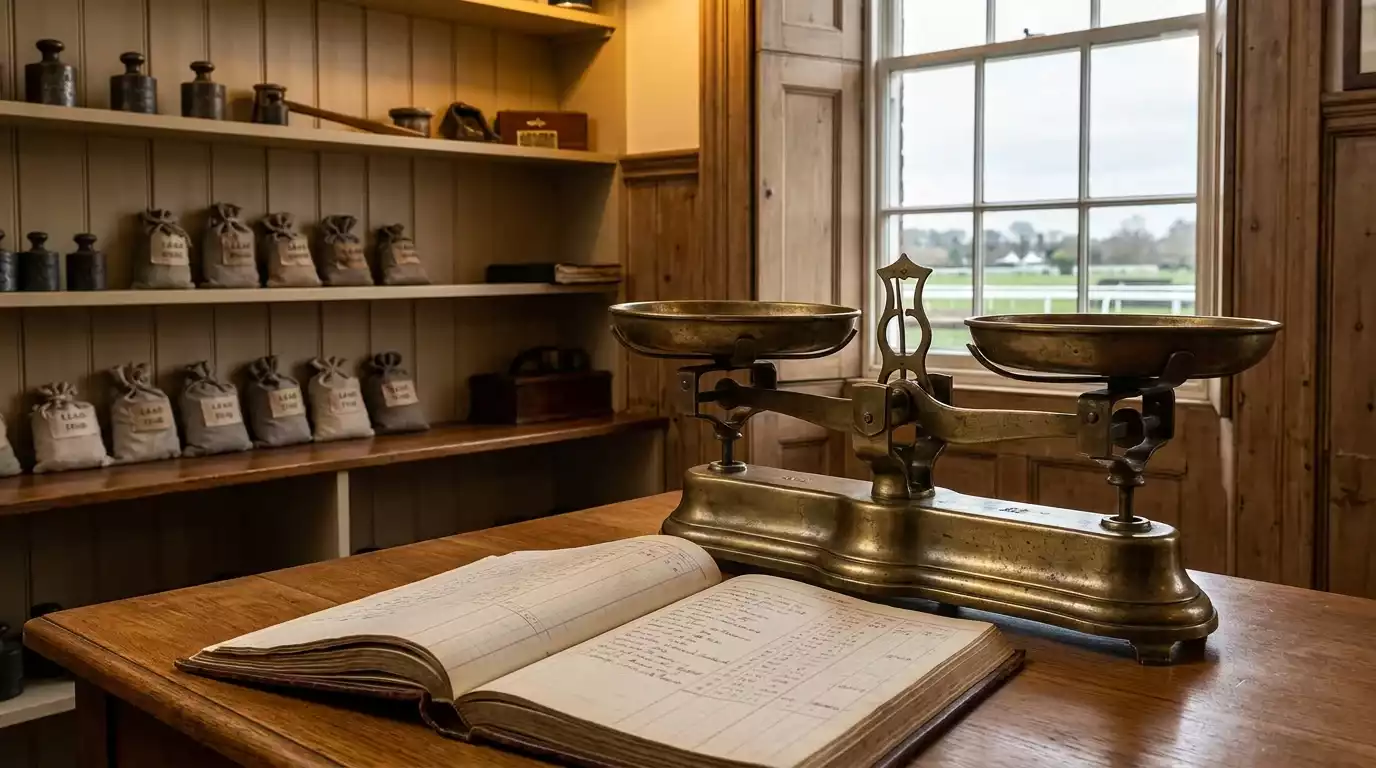
The “Weighed in” announcement is the moment your winning slip becomes a winning slip in the legal and commercial sense. It signals that the jockeys have weighed in at or above the weight they carried in the race, that the stewards have not raised any enquiries, and that the result stands as official. Most races run cleanly enough that “Weighed in” is announced within two or three minutes of the finish.
When the announcement is delayed, bookmakers hold settlement. Online accounts show the bet as “pending” until the result is officially declared. Betting shops will not pay out until the result is “Weighed in” and confirmed. Punters who try to cash out a winning slip during an enquiry are told to come back after the verdict.
The system protects everybody. Bookmakers don’t pay out on a result that gets overturned. Punters don’t get paid for a horse that ultimately doesn’t win. But the gap between crossing the line and “Weighed in” can stretch from two minutes to half an hour, and punters who don’t understand the process can get anxious about why their winning bet hasn’t paid out yet.
Positive samples and post-race disqualifications
The slower category of result-changing events happens after the racing day is over. Post-race drug testing is part of British racing’s regulatory framework, and horses that produce positive samples can be disqualified weeks or months after a race. When that happens, the betting industry generally honours the original “Weighed in” result for slip settlement purposes, but the racing record is amended and any future form-line analysis treats the original result as voided.
The practical effect on punters is small because the betting industry rule is that “Weighed in” is the final word for slip settlement. The exception is when the disqualification happens before “Weighed in” – for example, when the horse fails a pre-race test or is found to have raced under irregular conditions. In those cases, the slip is voided and stakes returned.
For punters who use form-book analysis to find value, the broader implication is that the published form line for a race can change months after the event. Horses that finished second in races where the original winner was later disqualified now show a “1st” in the form book even though the bet that day did not pay out as such. This is one of the reasons that handicap marks and official ratings sometimes seem to jump unexpectedly between runs – the underlying race results have been amended retrospectively.
How tight finishes change the betting market
Stewards’ enquiries also have a real-time effect on live in-running betting markets. The price on a horse that has just crossed the line first will start to firm as soon as the photo is announced in their favour. If an enquiry is called, the market reopens briefly with prices reflecting the uncertainty of the verdict. Punters who follow live markets see a horse drift from 1.05 (the price implying near-certain win settlement) back to maybe 1.40 or 1.60 while the enquiry runs. The exchange market is liquid enough during these windows to provide some hedging opportunity for punters who already have positions.
The betting exchange’s GGY contracted from £161m in 2019-20 to £124m in 2021-22 – a 23% decline driven largely by affordability checks and the migration of high-roller business offshore. But the exchange remains the place where the in-running market shows its truest face during enquiries, with prices reflecting genuine probability rather than bookmaker-imposed margins. Boxing Day’s Betfair Exchange win market on the King George VI Chase ran £13,031,239 in 2023 and £11,216,744 in 2024, a 14% drop in a single year that mirrors the broader exchange decline.
For punters who watch live markets carefully, enquiries are one of the few moments where genuine information arrives faster than the headline price adjusts. The horse that has clearly committed a stewards-worthy interference often trades at prices that don’t fully reflect the disqualification risk for ten or fifteen seconds after the line. That is a window for the very fast and very engaged. Most punters miss it entirely.
Reading the result like the stewards do
Across a betting year, the practical advice on enquiries comes down to three habits. First, do not assume your bet has paid out until “Weighed in” is announced. Watching the slip move from pending to settled before celebrating costs you nothing and saves you the mistake of placing follow-up bets against money you don’t yet have.
Second, learn what kinds of incidents typically trigger enquiries. Drift to the rail in the final furlong of a 5f sprint, a horse hanging right and causing another to check, a whip count that exceeds the BHA limits, an early-stride interference at the start of a chase – these are the standard triggers. Watching the replay before the stewards announce helps you anticipate the verdict.
Third, recognise that the result is final when the stewards say it is, not when the line is crossed. The British system gets things right far more often than not, but the verdict is the verdict, and a bet placed on the apparent winner does not pay out unless the official ruling backs it. That is the cost of doing business in a regulated sport, and the protection it offers – bookmakers cannot retroactively void winning slips, punters cannot retroactively claim losing slips – is worth the brief uncertainty around tight finishes.
Common questions about result verdicts
What is the difference between a photo finish and a stewards’ enquiry?
The photo finish determines the order across the line using high-speed camera imagery. The stewards’ enquiry investigates whether the running of the race was clean – interference, dangerous riding, whip use. The photo gives you the apparent result. The stewards confirm or alter it. Both can happen in the same race, and the stewards’ decision takes precedence.
How long can a stewards’ enquiry take?
Most enquiries are resolved within 20-30 minutes of the finish, with the verdict announced before the next race. Complex incidents involving multiple horses or video review from several camera angles can take longer, occasionally pushing into the following race’s preliminaries. The ‘Weighed in’ announcement marks the official end of the enquiry process.
Can a winning bet be voided after the race?
A bet settled at ‘Weighed in’ is generally final for betting purposes, even if subsequent drug-testing or disciplinary action alters the racing record. The exception is when a disqualification happens before ‘Weighed in’ is called – in those cases the slip is voided and the stake returned. Once ‘Weighed in’ is announced, the bookmakers honour the result as settled.
Prepared by the Bets Horse Racing editorial staff.