Ante-Post Horse Racing Betting: Odds and NRNB Rules
 Available in US

The most expensive ante-post bet I ever placed was on a horse that did not run. £100 on a Gold Cup contender at 10/1 in October – a price I was convinced was a steal. The horse picked up a stress fracture in training in January. By March he was retired. My stake was gone, the bookmaker kept the money, and the horse I had backed never saw a racecourse again. That is ante-post betting in three sentences. You lock in the price; you accept that your stake is at risk in ways a standard bet is not. The trade-off is real and it cuts both ways.
Ante-Post Liability: Lock-In Prices and NRNB Windows
An ante-post bet is a bet placed before the final declarations of a race. Final declarations usually appear 24-48 hours before the off in jumps racing and on the day or the day before in flat racing. Anything earlier than that – sometimes weeks or months earlier – is ante-post.
The trade-off is exactly the one my Gold Cup mistake illustrates. Early prices on big races are usually bigger than the prices you would get nearer the day, because the bookmaker is offering compensation for uncertainty. The compensation comes with a price – if your horse does not run, for any reason, the stake is lost. Withdrawn, retired, injured, refused entry: all of those produce a losing ante-post bet, even though the horse never went to post. The exception is the non-runner-no-bet concession, which I will come to.
The economic logic is straightforward. You are paying for early information advantage. If you can identify a horse months in advance whose price is going to shorten significantly as the race approaches, you capture the difference. If you cannot, you are paying a premium for an outcome that may never materialise.
The mechanics of ante-post
The basic structure is the same as any other bet. You select a horse, take the offered price, stake your amount, and wait for the race. If the horse wins, you collect at the price you took. If it loses, you lose the stake. The differences are at the edges.
First, prices on ante-post markets are quoted in fractional or decimal form like any other market, but they are usually longer than they would be closer to the race. A horse priced at 10/1 in November might be 6/1 by February and 4/1 on the morning of the race. Taking the November price locks you in at 10/1 – assuming the horse runs.
Second, ante-post bets sit outside Best Odds Guaranteed in almost all cases. BOG starts in the morning of the race; ante-post bets are made too far ahead to qualify. You take the price; the price is what you have.
Third, deductions can apply. If a major contender is withdrawn from the race before the off, the bookmaker may reformulate the prices on the remaining runners under Tattersalls’ Rule 4. Ante-post bets struck before the withdrawal are usually exempt from Rule 4 – that is one of their few protective features – but the rules vary by operator and are worth reading carefully.
Non-runner-no-bet concessions and when they open
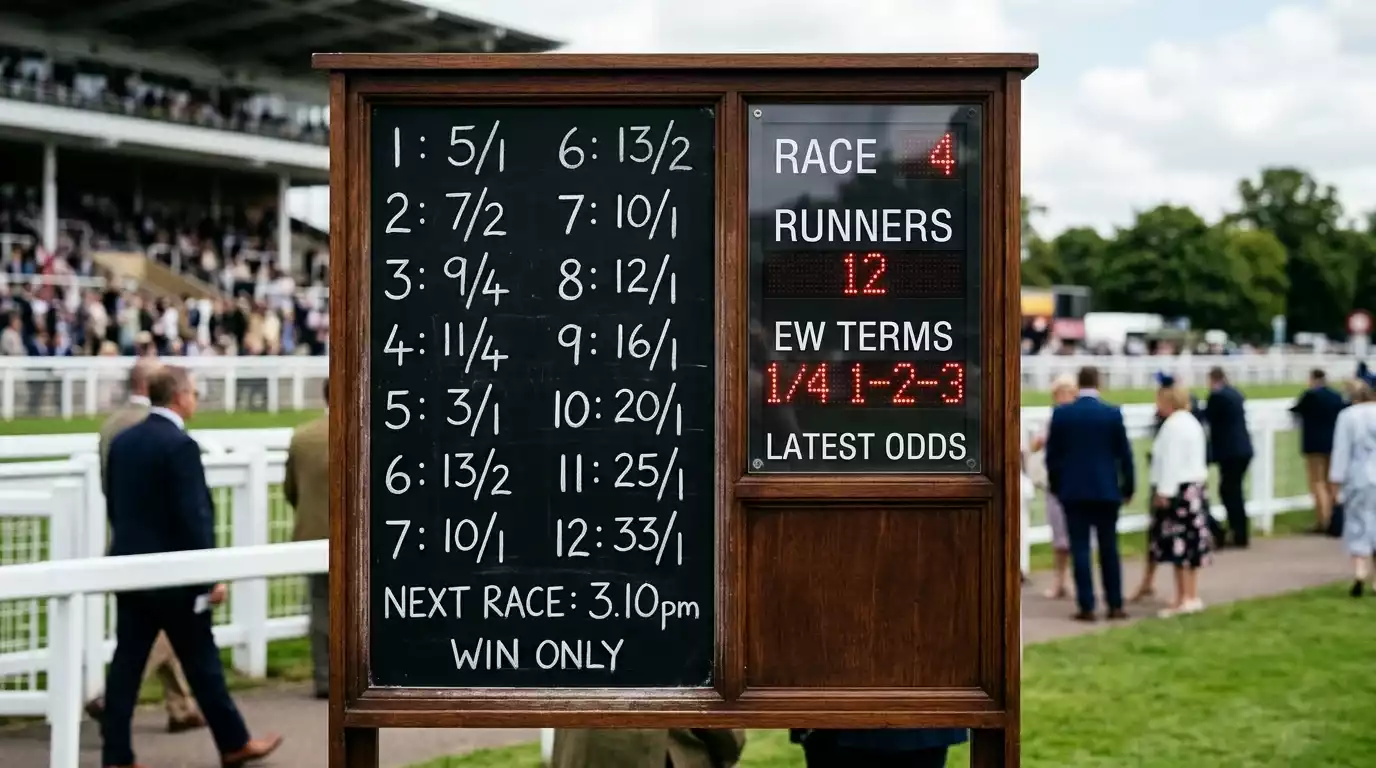
Non-runner-no-bet, or NRNB, is the single most important protection available to ante-post punters. Under standard ante-post rules, a horse that does not run loses the bet. Under NRNB rules, a horse that does not run produces a refund of the stake. Same price, same horse, dramatically different risk profile.
NRNB usually opens a few days to a week before the race, depending on the operator and the meeting. For the Cheltenham Festival, NRNB on the four main championship races – Champion Hurdle, Champion Chase, Stayers’ Hurdle and Gold Cup – typically opens around the start of February, six weeks before the festival. For the Grand National, NRNB often opens at the five-day or 48-hour declaration stage. For Royal Ascot’s big races, NRNB tends to open in the week of the meeting.
The price you get under NRNB is usually shorter than the equivalent ante-post price without the concession. The bookmaker is pricing in the protection. If a horse is 8/1 ante-post and the NRNB market opens at 6/1, you are paying two points of price for the right to a refund if the horse does not run. Whether that price is worth paying depends on the probability of the horse running. For a horse currently in training and on schedule, the protection is overpriced. For a horse with a fitness question, it may be undervalued.
Ante-post markets for the three biggest UK races
Cheltenham Gold Cup, Grand National and Epsom Derby are the three races where ante-post markets are deepest, longest-running and most actively traded. Each has its own rhythm.
Cheltenham Gold Cup ante-post markets typically open in April or May of the previous year, immediately after the previous Gold Cup has been run. Prices on the eventual winner often shorten dramatically through the autumn and winter as the horse posts trial wins. The 2025 Cheltenham Festival put all 28 of its races into the top 31 races of the year by betting turnover – a concentration of liquidity that makes the ante-post markets especially active.
Grand National ante-post markets traditionally open in November or December for the following April’s race. The field is large – usually 34-40 runners – and the ante-post prices are correspondingly bigger. The William Hill forecast of £450m turnover across the four-day Cheltenham Festival in 2026 gives you a sense of the scale of liquidity these big markets attract; Grand National produces similar concentration in a shorter time window.
Epsom Derby ante-post markets open immediately after the previous Derby and are dominated through the autumn by the unraced juveniles entered for the race by their owners at the entry stage. By April and May, the trials at Chester, Lingfield and York reshape the market. By race day, ante-post pickups from December and January have either become winners or losers.
Price compression and value windows
Ante-post markets compress as the race approaches. A horse priced at 25/1 in October might be 16/1 in January, 10/1 in March, 6/1 on the morning of the race. The compression is largely linear – each piece of new information (a trial run, a workout report, a stable change) reduces uncertainty and tightens the price.
The opportunity is to identify horses whose true probability is higher than the ante-post market suggests, and to take the price before the market catches up. The risk is that the horse never runs, in which case all the value capture is wasted. NRNB concessions partially solve this – at a price.
The most productive ante-post windows tend to be the days immediately after a big trial race, when one horse has just demonstrated something that the rest of the market has not yet fully priced in. The 24-48 hour window after a major Cheltenham trial in January, for example, sometimes produces clear value on horses that look likely to step up further at the festival itself. That kind of bet is at the heart of disciplined ante-post strategy. Random punts on horses you saw mentioned in a Sunday paper are not.
For the festival itself, the Grand National 2026 betting guide covers the unique market structure of Aintree in detail.
Common questions about ante-post betting
When does an ante-post market switch to non-runner-no-bet?
There is no fixed rule across the industry. For Cheltenham championship races, NRNB usually opens around six weeks before the festival. For the Grand National, NRNB typically opens at the five-day or 48-hour declaration stage. For Royal Ascot and the Derby, NRNB usually opens in the week of the meeting. Individual bookmakers may extend or shorten these windows depending on their commercial strategy.
Can I cash out an ante-post bet?
Cash out availability on ante-post bets is rare and inconsistent. Most operators do not offer cash out on bets placed months before the race because the matching market is too thin. Some larger operators offer limited cash out in the final week or two before the race, when the market becomes more active. Reading the specific cash-out terms before placing the bet is the only reliable way to know.
What happens to my ante-post bet if the horse is retired?
Under standard ante-post rules, retirement means the horse does not run and the stake is lost. Under NRNB rules, retirement before the race typically triggers a refund. Some bookmakers operate intermediate rules – refunds for early-season retirements and standard rules for late retirements – so the specific terms of the bookmaker matter.
Created by the ”Bets Horse Racing” editorial team.