Non-Runners and Rule 4 Deductions in UK Racing
 Available in US
Table of Contents
- Tattersalls Rule 4 Mechanics and Non-Runner Betting Recalculations
- What Rule 4 actually says
- The sliding scale that matters
- When Rule 4 doesn’t apply
- Walking through a £10 each-way slip
- Why bookmakers tighten the scale ahead of festivals
- How non-runners interact with each-way terms
- The pre-race habits that protect your slip
- Questions punters ask about non-runners

I once backed a horse at 8/1 in the morning, watched the favourite get withdrawn at the start, and discovered my winning slip paid out at 11/2. Nothing on the horse changed. Nothing about my bet changed. A clerk somewhere had applied Rule 4, and a quarter of my profit had quietly evaporated. That was the day I stopped treating non-runners as somebody else’s problem.
Tattersalls Rule 4 Mechanics and Non-Runner Betting Recalculations
Rule 4 is the bit of fine print that catches every punter eventually. It is the bookmakers’ mechanism for adjusting payouts when a horse you didn’t back drops out of the race. The market was priced assuming a certain field. Take a runner out and the remaining horses are, mathematically, more likely to win. The bookmaker takes a deduction to reflect that. The deduction comes out of your winnings, not out of their margin.
Every UK punter needs to understand the basics, because non-runners happen on roughly 8% of all runners across British racing – somewhere between two and four horses pulled out per average meeting. With 1,460 fixtures across 59 racecourses in 2025, that runs into tens of thousands of non-runners a year, and a substantial fraction of them trigger a Rule 4 deduction on someone’s winning slip.
What Rule 4 actually says
The rule is sometimes called Rule 4(c) because it sits at clause 4(c) in the old Tattersalls Committee rule book. The Tattersalls Committee handles disputes in British and Irish racing betting, and the rule has carried forward into modern bookmaker terms with only minor adjustments.
The mechanic is a sliding scale of deductions linked to the SP – starting price – of the withdrawn horse. The shorter the price of the non-runner, the bigger the deduction. A horse withdrawn at 1/9 or shorter triggers a 90p in the pound deduction. A horse at 9/4 to 14/5 triggers 25p. A horse at 14/1 to 33/1 triggers just 5p. Anything longer than 33/1 is generally exempt because the market barely accounted for it in the first place.
Bookmakers apply the scale to your net winnings – the profit portion of your slip, not the full return. A £10 bet at 8/1 winning produces £80 profit. A 25p deduction takes £20 off, leaving £60. Your stake comes back regardless. The horse you backed still won. But the slip pays as if you had been on at 6/1 instead of 8/1.
The sliding scale that matters
Memorising the full Tattersalls scale is unnecessary for most punters, but the broad bands are worth knowing because they determine how worried to be when a runner is withdrawn. Anything priced 4/9 or shorter is a heavyweight withdrawal – expect deductions of 75p or more in the pound. Anything between evens and 5/2 strips between 30p and 45p. The mid-price band of 3/1 to 5/1 typically takes 20p to 25p.
What the scale captures is the market’s implied probability. A horse at 1/9 was rated by the bookmakers as having about a 90% chance of winning. If that horse cannot run, the remaining field has effectively been promoted to fill that probability mass. A 90p deduction transfers that promotion into the maths of the payout. The scale is mechanical, not arbitrary – it tracks the implied probabilities at each price point with surprising accuracy.
One subtlety is that deductions are calculated against the SP of the non-runner, not the price you took on the horse you backed. If you took 8/1 in the morning about your runner and the favourite came in at 6/4 before being withdrawn, the deduction is calculated against the 6/4 SP of the non-runner – not against your morning 8/1. This is the part that catches people out.
When Rule 4 doesn’t apply
Not every non-runner triggers a deduction. The withdrawal has to happen at or after a specific point – typically the declaration of starters or, on some markets, after the off – for Rule 4 to kick in. Horses that are withdrawn well before the race, before the market firms up, are simply removed from the book and prices re-formed without deduction. Punters who took early prices on the favourite that gets withdrawn in this earlier window get their stakes back as a void bet, not a deducted winning slip.
The cut-off varies by bookmaker, but the principle is consistent. Once the market has been priced with the horse as a real runner, withdrawing that horse triggers Rule 4 on every other slip that wins. Withdrawals before that point typically don’t.
Ante-post bets work differently again. Ante-post slips usually do not get Rule 4 deductions when other horses are withdrawn because you took the early price knowing the field wasn’t finalised. The trade-off, of course, is that ante-post slips are typically void if your own horse doesn’t run.
Walking through a £10 each-way slip
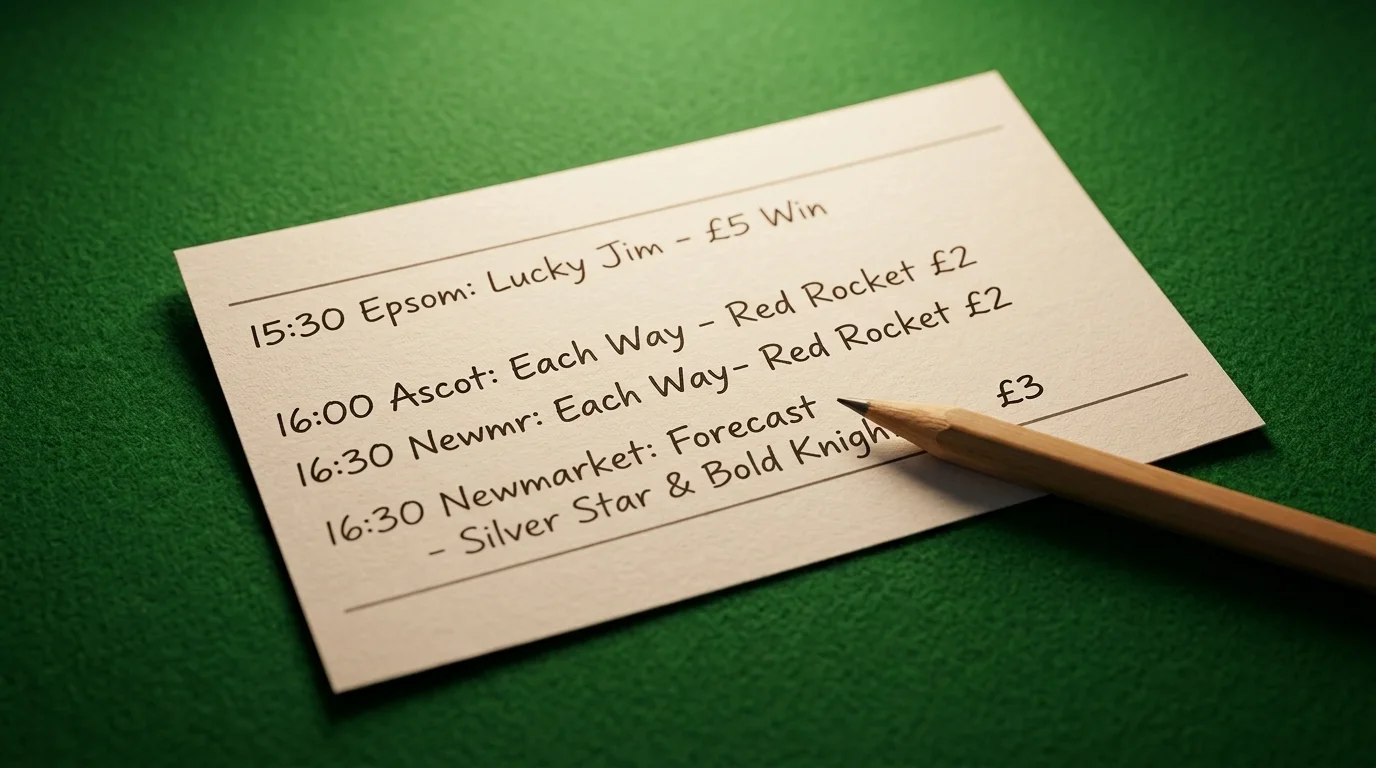
The clearest way to understand Rule 4 is to walk through a real-world slip. Imagine a £10 each-way bet – £10 win, £10 place – taken at 12/1 the night before the race. Total stake £20. The race goes ahead, but the morning favourite, priced 7/4 in the live market, is withdrawn at the start. Your horse wins.
The 7/4 non-runner triggers a 30p in the pound deduction under Rule 4. Your £10 win bet at 12/1 should pay £120 profit. Apply the 30p deduction and you get £84 profit instead. Add your stake back and the win portion returns £94. The place portion at one-quarter odds is 3/1 – £30 profit – and the same 30p deduction strips £9 from it, leaving £21 plus stake, so £31 from the place portion. Total return on the slip: £125 instead of the £150 you might have expected.
That gap – £25 on a £20 stake – is real money. On a Royal Ascot Saturday with multiple withdrawals, the same maths runs through every winning slip in the bookmaker’s book. The aggregate amount transferred from punters to bookmakers via Rule 4 over a busy festival day runs into millions.
Why bookmakers tighten the scale ahead of festivals
Festival weeks magnify Rule 4 risk. Cheltenham 2025 saw 60,583 attendees per day across the four-day Festival and 969,322 across the 2022-2025 period, with William Hill forecasting £450m turnover for Cheltenham 2026. Field sizes are bigger, ante-post action is heavier, and non-runner declarations are more frequent in the week leading up to each race as connections weigh ground conditions and horse welfare.
Bookmakers respond by being more conservative with their pre-race prices. They know more non-runners are coming. They know the deductions will fire. They build slightly more margin into the win book and the place terms accordingly. For punters, the practical takeaway is that betting too early on a festival race exposes you both to ante-post void risk and to multiple Rule 4 deductions if you bet the day before the race. Betting closer to the off – say within the hour – usually means a more stable field, fewer withdrawals after your slip is taken, and a smaller risk of compounded deductions.
One quirk worth noting: when multiple horses are withdrawn from the same race, the deductions accumulate but with a cap. UK bookmakers generally apply a maximum total deduction of 90p in the pound across all withdrawn horses, so even a freak race where three or four runners come out at short prices will not strip your slip below 10p in the pound of profit.
How non-runners interact with each-way terms
Each-way bets get hit twice when Rule 4 fires, which is something a lot of casual punters miss. The deduction is applied separately to the win portion and the place portion. If your each-way slip wins outright, both portions take the deduction. If it places without winning, only the place portion pays out, and that portion takes the deduction in full.
Place terms also adjust with non-runners. Most bookmakers operate a sliding place-terms schedule based on field size. A 16-runner handicap might pay four places at one-quarter the odds. Drop the field to 14 runners through withdrawals and the same race might revert to three places at one-fifth. The terms you got when you placed the bet often hold, but some books reserve the right to adjust place terms if field size falls below the threshold required for the original terms. This is buried in the bookmaker terms and conditions – and worth knowing about, because it can quietly change the value of a slip you thought you had locked in.
For a clear walkthrough of how field-size place terms work in the first place, the handicap mark guide covers the underlying structure of British handicap racing that drives most of these adjustments.
The pre-race habits that protect your slip
Across a betting career, the punters who lose the least money to Rule 4 share a small set of habits. They check declared runners and final field size before placing the bet, especially for races with strong morning favourites. They wait for the final non-runner declaration when it is publicly available – usually around an hour before the off for most flat racing, sometimes earlier for jumps. They avoid stacking multiple early bets on the same race because each slip is exposed independently to any deduction.
The other practical habit is to read the Rule 4 disclosure on your slip itself, not just the bookmaker’s general terms. Most modern slips show whether a deduction has been applied and at what rate before you confirm the payout. If you see a deduction that doesn’t match what you expected, the slip detail will tell you the SP of the non-runner the deduction was based on. That information lets you challenge the calculation if it looks wrong, which does occasionally happen.
The hardest lesson is the one I learned the day my 8/1 became 11/2. Read the field, expect withdrawals, and price your stake to a world where the prices on your slip might not be the prices that pay out.
Questions punters ask about non-runners
Beyond the mechanics, two questions come up more often than any others when punters first run into Rule 4.
Does Rule 4 apply if my horse is the non-runner?
No. If the horse you backed is withdrawn, your stake is returned as a void bet rather than triggering Rule 4. Rule 4 only applies to other horses on your slip that go on to win or place after a different runner has been withdrawn from the race.
Can I avoid Rule 4 by taking early prices?
Early prices fixed before the field firms up may be void rather than subject to Rule 4 if a withdrawal happens later, but the trade-off is that early prices on your own horse may also be void if that horse fails to run. The practical compromise is to wait for the final declaration window and accept that some deductions are part of the cost of betting on horse racing.
Is the Rule 4 scale the same at every bookmaker?
The Tattersalls scale is the industry standard and almost all UK-licensed bookmakers follow it, but some books apply minor variations or round differently at the edges. The 5p-to-90p sliding scale linked to SP price bands is consistent across the major operators.
Written by the editors at Bets Horse Racing.