Going and Ground Conditions in UK Horse Racing
 Available in US
Table of Contents
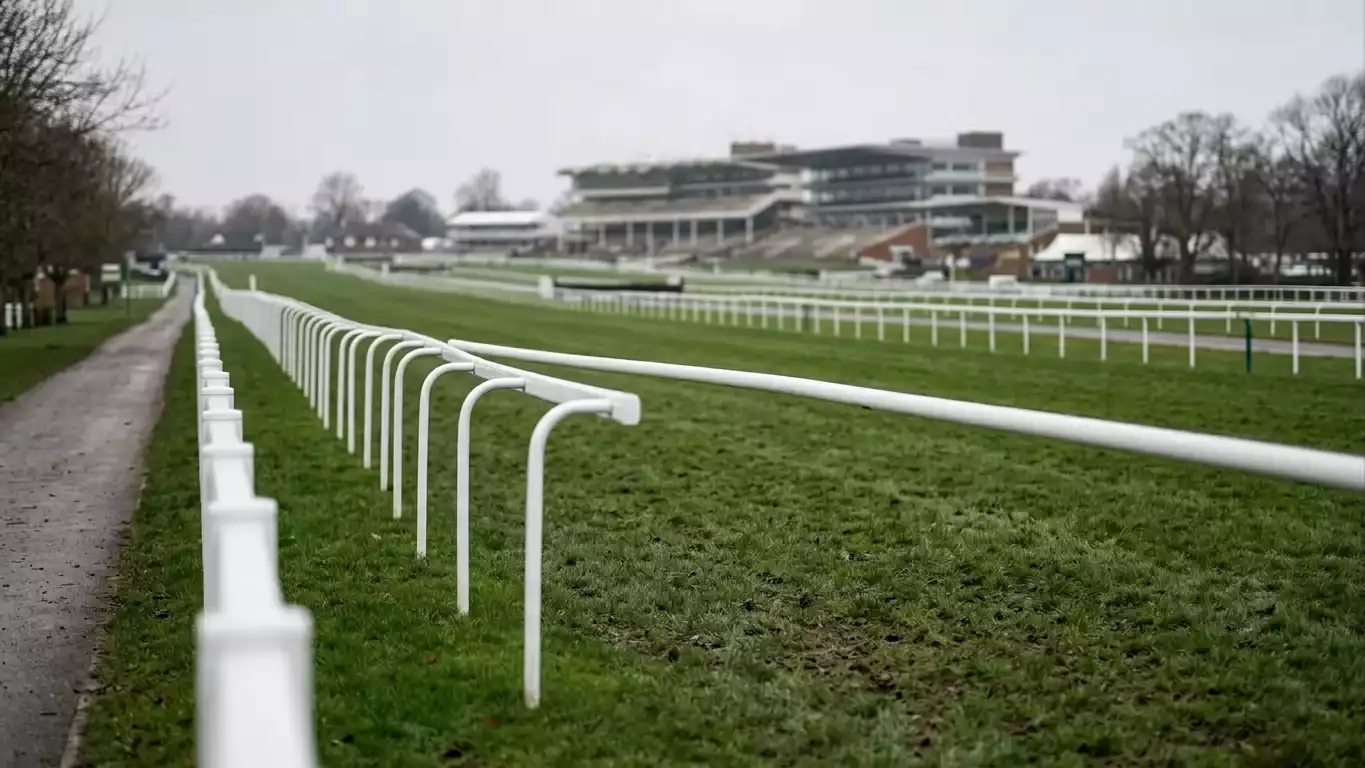
March 2018. Cheltenham Festival. The clerks of the course had announced “soft, heavy in places” at 7am, and by the time the Champion Hurdle went off at 3.30pm, the ground was bottomless. I had backed a horse trained for fast going with a flat action, and watched it labour around in fifth, beaten before the home turn. The winner had been the only one in the field with three previous wins on heavy. I had read the form, I had read the prices, I had not read the weather. That afternoon cost me a year’s worth of careful staking, and I learned the lesson I should have learned years earlier – going is not a footnote.
Stick Readings and Turf Adjustments from Heavy Rainfall
The numbers are uncomfortable. An inch of rain on the morning of a meeting can lengthen finishing times by five to fifteen seconds over a mile. That sounds small until you remember that fifteen seconds at racing pace is roughly eighteen lengths. A horse that wins on good ground by two lengths is, on heavy ground, often beaten ten lengths by the same field. The trip itself has effectively changed.
Going does more to rewrite a card than any other single variable I track. Changing jockey moves the needle by perhaps half a length. A trainer switch over six months moves the needle a length or two. A shift from good to soft can move the needle by ten or more, and most of that movement is invisible if you read the form book without knowing what ground each previous performance was run on. The 1,460 fixtures across British racing each year produce huge variation in ground conditions – the average turnover per race fell 8% in 2024-25, partly because punters are getting better at staying away from races where the going has changed mid-week and turned the form upside down.
The seven-step UK going scale
British turf going runs along a defined scale, from firm at the dry end to heavy at the wet. From driest to softest the official descriptions are: firm, good to firm, good, good to soft, soft, soft to heavy, heavy. The clerk of the course can also add “in places” – so “soft, good to soft in places” means most of the track is soft, but parts are slightly faster.
Each step on the scale changes finishing times by roughly two to four seconds over a mile. Firm is rare now in Britain – clerks water tracks aggressively to avoid it, partly for safety, partly because trainers refuse to run their best horses on truly fast ground. Good is the historical default. Soft is more common in autumn and winter. Heavy is reserved for genuinely waterlogged surfaces, and a heavy National Hunt meeting is a different sport from a good-to-soft one.
All-weather tracks – Wolverhampton, Kempton, Lingfield, Newcastle, Southwell, Chelmsford – use a different scale: fast, standard to fast, standard, standard to slow, slow. The surfaces are Tapeta or Polytrack, both designed to produce more consistent times. They are not weather-proof but they are weather-resistant, and the going descriptions move less dramatically than on turf.
The going stick: penetration and shear
The going stick is the closest racing has to an objective measurement of going. It is a metal probe that a clerk pushes into the turf at regular points around the track, recording two numbers – penetration, how easily it goes in, and shear, how much resistance the turf offers when twisted. Those two numbers combine into a single reading on a scale of roughly 4 (very heavy) to 14+ (firm).
Most clerks publish a single average figure, sometimes a range. Anything below 6 is heavy territory. 6 to 7 is soft. 7 to 8 is good to soft. 8 to 9 is good. 9 to 10 is good to firm. Above 10 is firm – and you will rarely see it in modern British racing.
The catch is that the going stick measures the turf at the time the reading was taken. A clerk who reads the track at 7am and posts “good to soft, 7.3” has captured one moment. By 4pm, with sun on the track, the reading might be 7.8, which is firmly good to soft. The going stick is a snapshot, not a forecast. When I am betting into an afternoon card after a morning reading, I assume some drying on a sunny day and some softening on a wet one, and I read the official update after each race for the actual movement.
Spotting a ground-dependent horse from the form book
Some horses go on anything. Most do not. The form book is the place to learn which is which, and the trick is to look at the going on each previous race, not just the finishing position. A horse with three wins reading “1-1-1” looks unbeatable. If those wins all came on soft and the horse is today running on good to firm, the unbeatable record is misleading.
I look for two patterns. First, a horse with consistent good performances across a range of going – that is your “anything” horse and it is a useful banker. Second, a horse with a clear preference for one type of ground, where every win is on soft and every poor effort is on faster ground. That horse is a value pick when the going swings its way and a poison pick when it does not. The races where this matters most are the big handicaps in October to March, where ground can vary from good to soft to heavy across a six-week window.
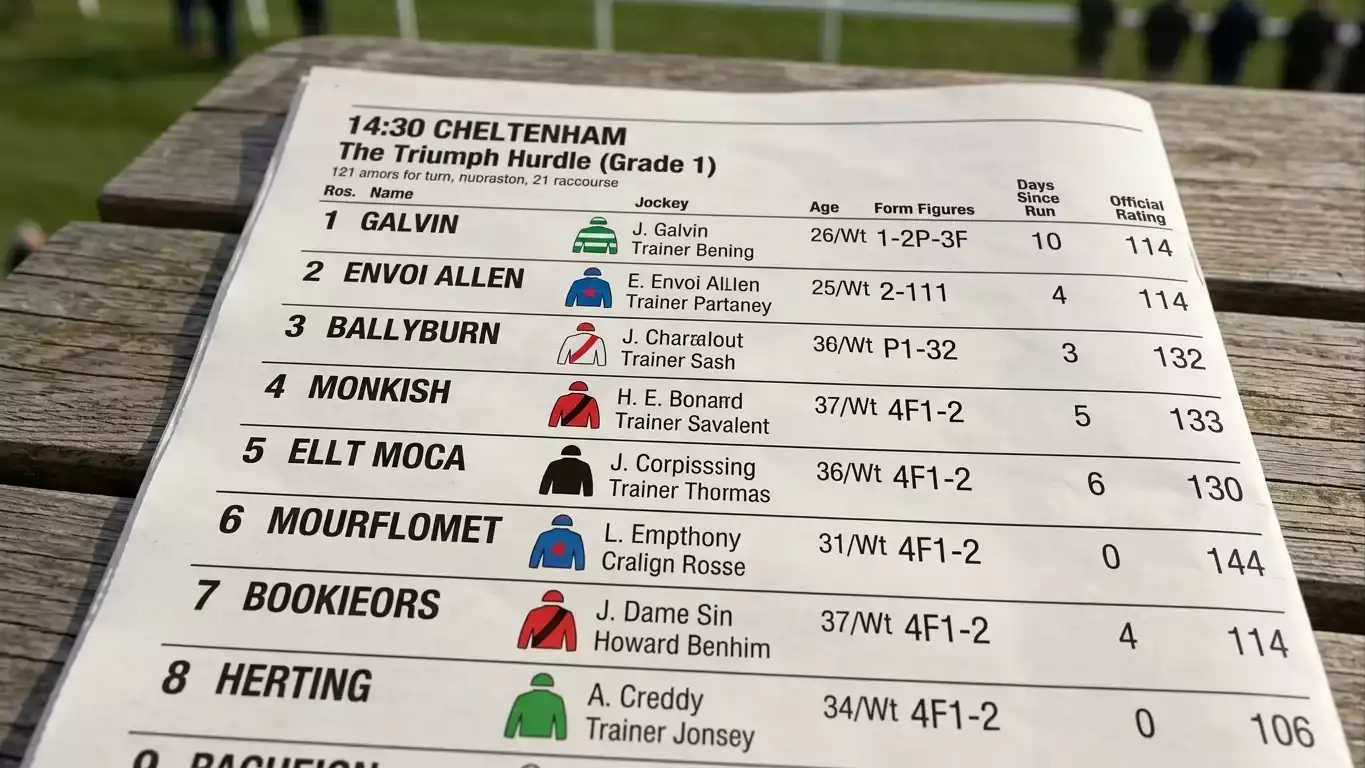
If you want to read the form figures themselves before you start matching them to ground, the racecard line-by-line walkthrough is the foundation.
Forecast windows and how the ground actually moves
Ground does not move smoothly. It moves in jumps. A quarter-inch of overnight rain on already-saturated turf might do nothing – the water sits on top and runs off. A quarter-inch on already-dry turf in summer can ease the going by a full step. The forecast matters less than the cumulative rainfall over the seven days before the meeting, and even that matters less than whether the track has been watered in the same period.
I check three sources on big meeting mornings – the official going report on the racecourse’s website, the BBC weather forecast for the relevant postcode, and the social media accounts of the clerks themselves, who often post short updates with photos of the surface. The clerks know their tracks. If a clerk says “the bend is softer than the home straight”, you adjust your selections for races that finish past that bend.
Adjusting your bet to the morning going
“The battle between us and the punters over the four days of the Cheltenham Festival is unrivalled in Jumps racing,” is how William Hill’s Lee Phelps describes the week of the year when ground reading is most valuable. Festival meetings are won and lost on it, and the books shorten and lengthen prices through the morning as the going firms or softens.
The practical workflow is short. Check the official going at 7am. Cross-check the forecast. Identify which horses in each race have proven form on that ground, and which are running on conditions they have not handled before. Where there is a price mismatch – a horse priced as a favourite on ground it has never won on – that is the spot to either lay off or look elsewhere. Best Odds Guaranteed only protects you on the early price; if the going changes between bet placement and the off, BOG does not refund you on the going call. The reading has to come first.
Common questions about going
Can a horse’s official rating drop on heavy ground?
Not directly. The official rating reflects all-going performance – the BHA’s handicapper assesses every race regardless of conditions. What changes is performance on the day. A horse rated 90 on its best ground may run to 75 on ground it dislikes, and a series of poor efforts on unsuitable surfaces can eventually pull the OR down.
When does the official going get updated on race day?
Clerks of the course typically post the official going at 7am, then update again after the first race once horses have actually run on the surface. Significant rain or sun during the meeting can prompt mid-card updates. The clerk’s call after the first race is often the most reliable read of how the ground is actually racing.
Prepared by the Bets Horse Racing editorial staff.