Best Odds Guaranteed in UK Racing: BOG Mechanics
 Available in US
Table of Contents
- Exploiting Best Odds Guaranteed (BOG) Limitations and Caps
- The mechanics: early price, SP and the refund
- When BOG starts – operator-by-operator windows
- Caps, exclusions and what “max £X return” means
- Why BOG often excludes virtual and US racing
- Does BOG actually beat a no-BOG site with sharper prices?
- Common questions about Best Odds Guaranteed
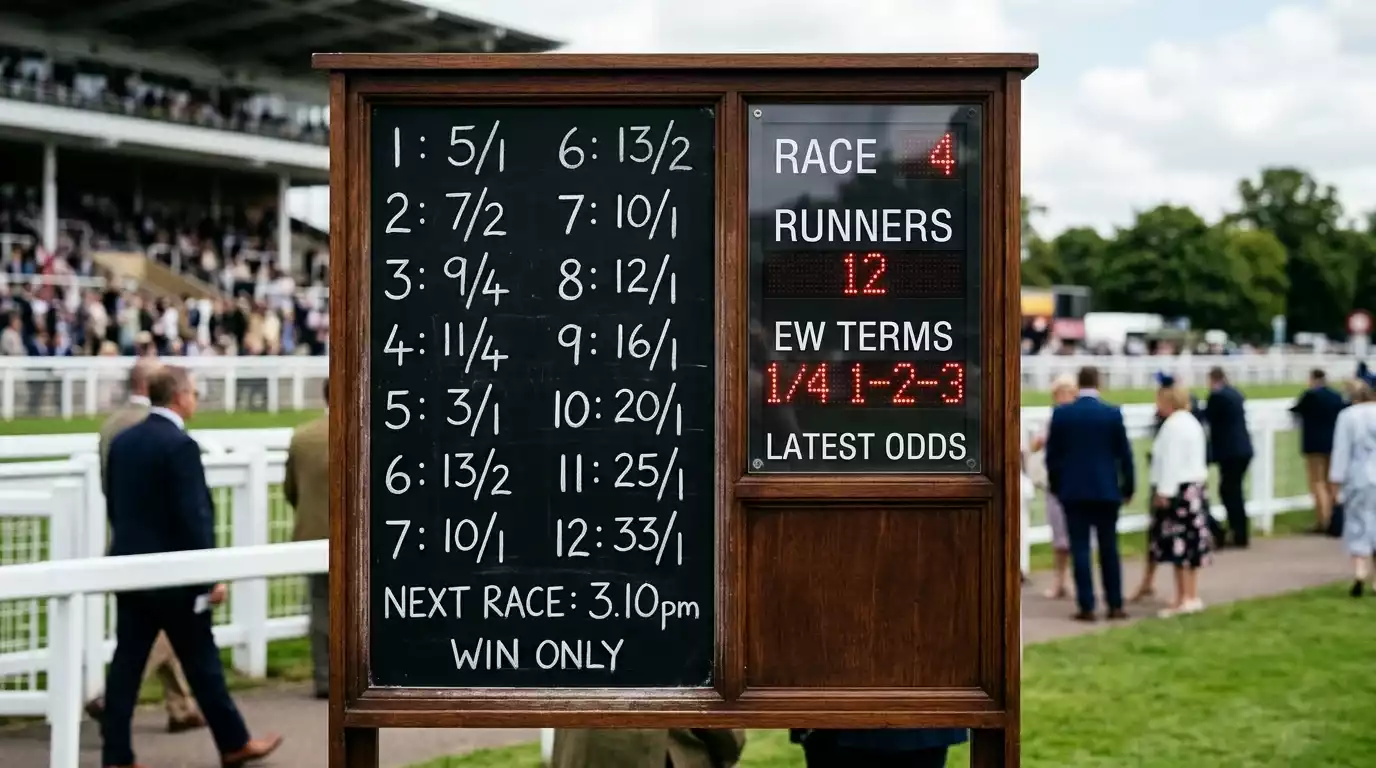
A regular punter I have known for years emailed me at the start of 2025 with what he thought was a routine question. “Why did my BOG bet pay out at the early price when the SP was bigger?” The answer is that BOG only ever pays you the better of the two – if SP is bigger, BOG pays you SP. He had been backing horses for three years assuming BOG worked the other way round. He had also been leaving money on the table. The promotion is the most valuable on the racing market, and the proportion of punters who genuinely understand it is much smaller than you might expect.
Exploiting Best Odds Guaranteed (BOG) Limitations and Caps
Best Odds Guaranteed pays you the better of the price you took and the starting price. If you back a horse at 5/1 in the morning and it goes off at 6/1, your bet pays at 6/1. If you back the same horse at 5/1 and it goes off at 4/1, your bet still pays at 5/1. The promotion is not a bonus. It is a structural compensator that pushes back against bookmaker margin in a small but consistent way.
This is more useful than it sounds. UK racing books typically run at 110-118% overround depending on field size, and the SP market – the final tote-style market created in the moments before the off – is even tighter. Without BOG, a punter taking an early price is gambling that the price will not lengthen. With BOG, the punter is taking the better of two prices. Across hundreds of bets, that asymmetry produces a meaningful uplift in expected return. Industry surveys suggest a 3-5% improvement on early-price ROI for punters who consistently use BOG, depending on how disciplined they are about taking it.
The mechanics: early price, SP and the refund
The mechanics are worth understanding properly. Bookmakers post early prices from the morning of a race, usually starting around 8am for that day’s UK racing. You back at the early price, the bet is logged, and the bookmaker waits for the official SP after the race.
The SP is generated by sampling on-course bookmakers’ prices in the seconds before the off and producing a single agreed figure. If SP is shorter than your taken price, your bet pays at your taken price – the early price is what was guaranteed. If SP is longer than your taken price, the bookmaker pays the difference as a top-up. The bet line on your account typically shows the bigger price applied.
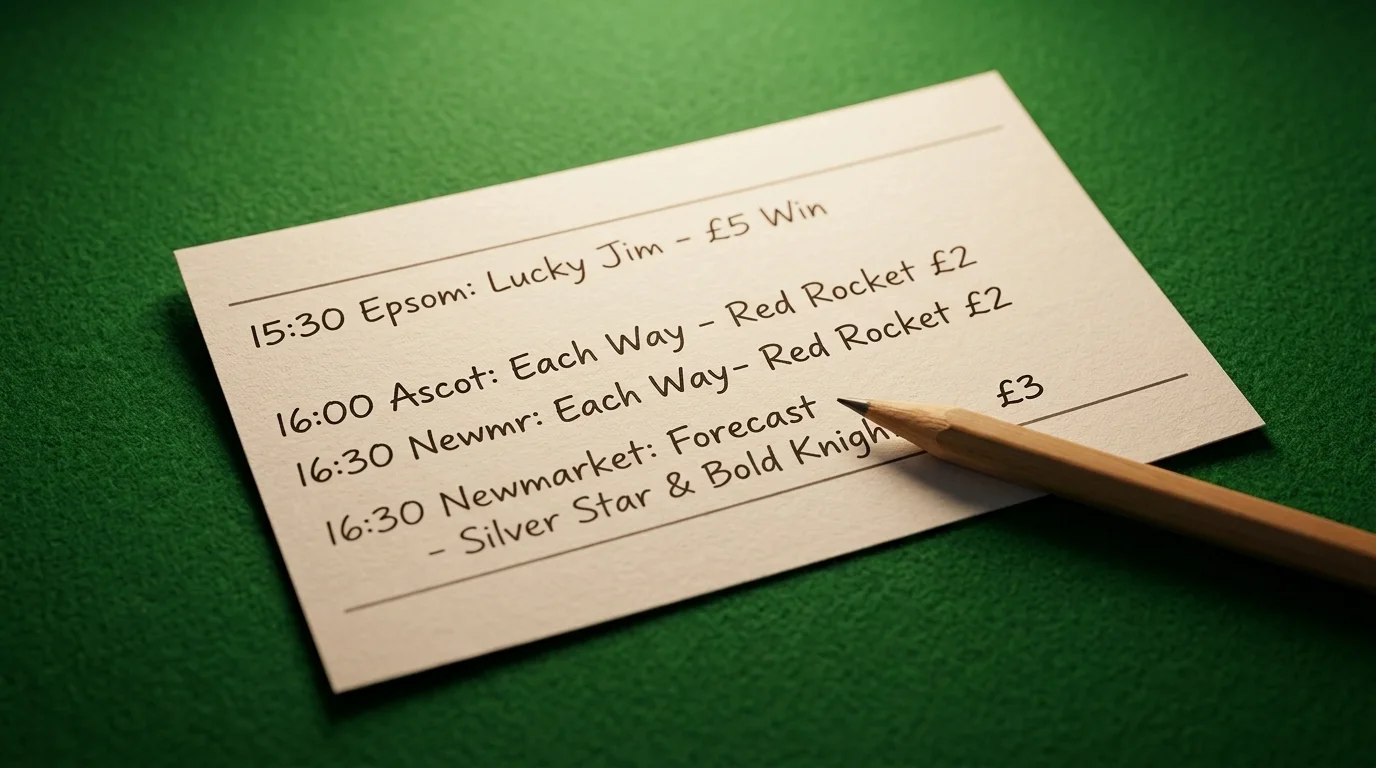
Worked example. You back a horse at 4/1 with a £20 stake. The horse wins and the SP is 5/1. Without BOG, your return is £100 (£80 profit plus £20 stake). With BOG, your return is £120 (£100 profit plus £20 stake). The extra £20 is the BOG top-up. The mechanism is simple, the gains are small per bet, and the compound effect across a betting year is substantial.
When BOG starts – operator-by-operator windows
BOG is not active 24 hours before a race. Each bookmaker sets its own start time, usually expressed as “from 8am on the day of the race” or similar. Some open as early as the night before. Some restrict BOG to specific markets or specific meetings. Reading the terms before placing the bet is the part most punters skip.
The pattern matters because the longer BOG is active, the more flexibility you have to take an early price and benefit from any subsequent shortening or lengthening. A bookmaker that opens BOG at 8am gives you nine hours on a 5pm race. A bookmaker that opens at 10am gives you seven. Across a betting year that difference adds up, particularly for ante-post-style bets placed days in advance, which are usually outside the BOG window.
BOG is generally restricted to UK and Irish racing. South African, French, American and Hong Kong meetings are usually excluded – they have their own market structures and SPs that the UK SP system does not match. Virtual racing is always excluded. Antepost markets are usually excluded.
Caps, exclusions and what “max £X return” means
Most BOG terms include a cap. The most common pattern is a maximum top-up per bet, expressed in pounds. £1,000 maximum BOG payout is typical. £500 caps exist at smaller operators. The cap matters most for big-priced winners on accumulators, where the top-up between an early 33/1 price and an SP of 50/1 on a £10 stake can run into hundreds of pounds.
Other common exclusions include each-way place portions – some operators apply BOG to win bets only, others apply it to each-way win-and-place stakes separately, others to the entire each-way return. The wording in the terms is the only authoritative source. Cashback promotions, free bets and risk-free wagers are often excluded from BOG. Bets placed on mobile but during specific banned windows can also be excluded.
The exchange does not offer BOG – exchanges work on commission, not margin, and the SP-style mechanism does not exist in the same form. If you bet at the early price on the exchange, you are betting at that price, and there is no top-up if the market drifts. For exchange punters, the BOG question is moot. For sportsbook punters, it is one of the most valuable line items on the account.
Why BOG often excludes virtual and US racing
Virtual racing is excluded because there is no organic SP. The “prices” on virtual racing are determined by algorithm at the moment of bet placement and the result is generated immediately. There is nothing to compare against. US racing is excluded because the US pari-mutuel system does not produce an SP in the British sense – the dividend is set by the totalisator pool, and the early prices offered in the UK morning are bookmaker creations rather than market-derived figures.
French, Hong Kong and South African racing are often excluded for similar reasons. The SP markets in those jurisdictions either do not exist in a form the UK bookmaker can verify, or operate on different timing schedules. Australian racing is sometimes covered, sometimes not. The terms vary by operator and are worth checking before backing.
Does BOG actually beat a no-BOG site with sharper prices?
The honest answer is sometimes. A bookmaker offering 5/1 with BOG and another offering 11/2 without BOG present a choice that depends on how often SP lengthens versus shortens on the horses you back. Industry data suggests that across a large sample, SP tends to be longer than the early-morning price about 35-45% of the time, depending on the type of race and the betting volume. That means BOG produces a positive top-up on roughly two in five winning bets.
If the no-BOG price advantage is small – half a point, say – BOG usually beats it across a betting year. If the no-BOG price advantage is significant – a full point or more – the sharper price usually beats BOG. The punter’s job is to do the maths on each individual bet rather than blindly favour the BOG operator.
Boxing Day 2024 saw the pre-off Betfair Exchange win market drop to £11,216,744, down from £13,031,239 in 2023 – a 14% drop driven largely by affordability checks pushing higher-volume punters off the exchange. BOG on the sportsbook side became more important to compensate for the exchange’s reduced liquidity. The smaller the exchange market, the more useful BOG becomes as an instrument for taking value.
If you are already comparing each-way terms across operators, the each-way mechanics guide covers how place fractions interact with BOG.
Common questions about Best Odds Guaranteed
Does BOG apply to each-way bets?
Usually yes, but the application varies. Some operators apply BOG to the win stake only. Others apply it separately to the win-and-place portions of the each-way bet. The place-stake BOG calculation can be slightly different because the place price is derived from the win price by the published fraction. Reading the bookmaker’s specific terms before placing the bet is the only reliable approach.
What happens if the SP is shorter than the early price I took?
You are paid at the early price. BOG always pays the better of the two prices – that is the entire point of the promotion. You never lose value from a shorter SP.
Is BOG available on ante-post bets?
Almost never. Ante-post markets are typically excluded from BOG because the price was set far in advance under different conditions, and the SP on the day reflects information the bookmaker did not have when the early price was offered. A handful of operators offer limited BOG on near-term ante-post markets, usually only in the final 24-48 hours before the race.
Written by the editors at Bets Horse Racing.