
UK Racing Black Market: The Threat of Unlicensed Betting
 Available in US
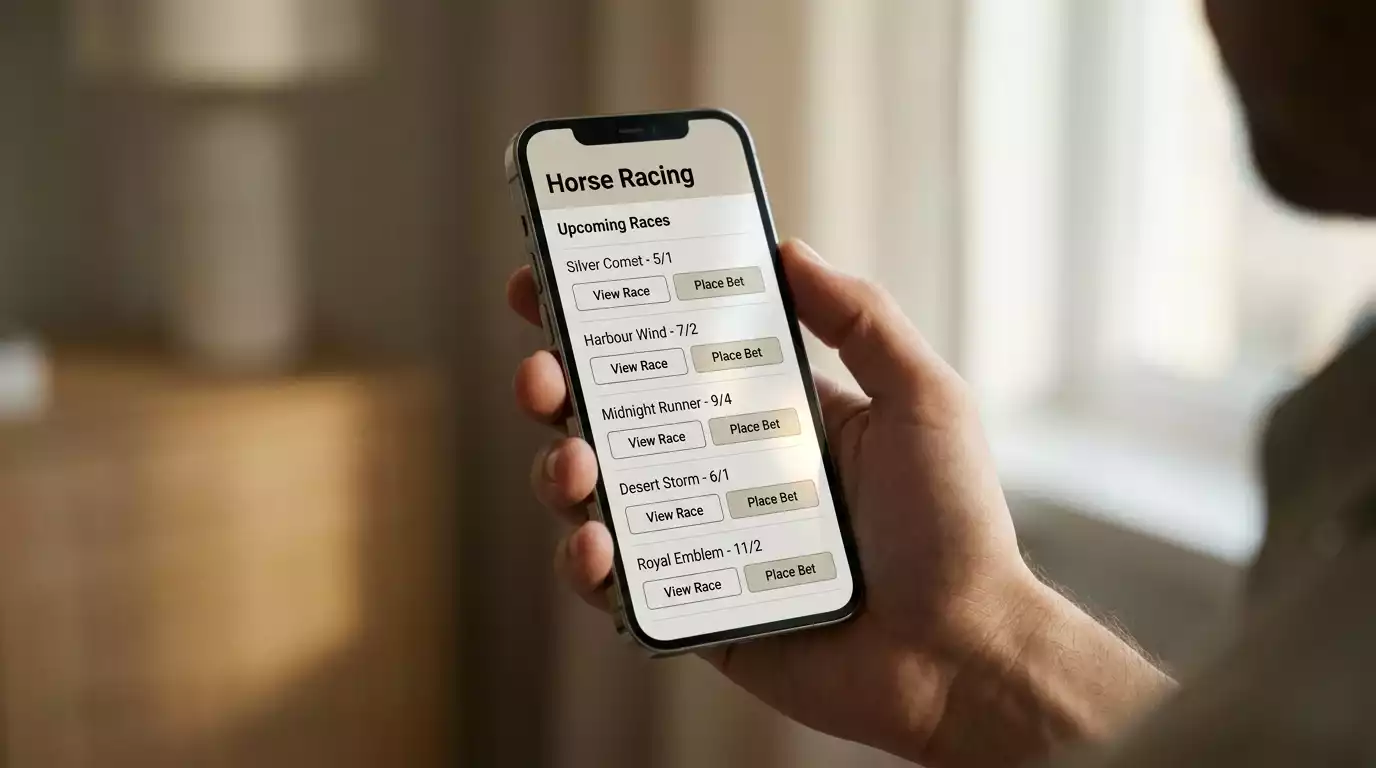
A reader sent me a screenshot in spring 2025. It showed a Google search for “horse racing betting” returning, in the third position, a site I had never heard of, with a slick interface and a “100% bonus” offer that looked too generous to be true. There was no UKGC licence number in the footer. There was no GamStop link. There was no Levy contribution mentioned anywhere. The reader had already deposited £500. He wanted to know if he was about to lose it. I told him he probably was, and that he was one of an estimated 1.5 million British adults now using sites that operate completely outside the UK regulatory framework.
Unlicensed Operator Search-Ad Tactics and Punter Risks
The phrase “black market” conjures shady men in pub car parks. The reality is much more mundane and much more dangerous. The unlicensed operators that take British bets in 2026 are not underground. They run polished websites with English-language interfaces, accept Visa and Mastercard deposits, advertise on Google and Meta, and look indistinguishable from licensed operators to the untrained eye. The only sign that they are unlicensed is the absence of a UKGC licence number, a fact that most punters do not check.
This is a search-ad problem more than a criminal one. The unlicensed sites buy ads, climb the search rankings, get reviewed by affiliate sites that do not check licensing, and capture punters who never realised they were leaving the regulated market. There is no smuggling, no money laundering ring, no organised crime element in the obvious sense. There is just a steady drift of British punters onto offshore platforms, and the regulator has limited tools to stop it.
£4.3bn and 1.5m punters
The numbers come from the Betting and Gaming Council, and they are conservative estimates. Roughly £4.3bn flows through unlicensed operators in Britain each year, involving around 1.5 million British adults. That is more than the entire Levy contribution from licensed bookmakers, multiplied many times over. It is a parallel betting economy operating in plain sight.
Inside the £4.3bn, horse racing punches above its weight. The Cheltenham Festival 2025 alone saw an estimated £60m flow through unregulated operators across the four days of the meeting. That is a remarkable concentration. It implies that the festival weeks – Cheltenham, Grand National, Royal Ascot – are when unlicensed operators capture the largest share of British punter activity, presumably because casual punters who do not normally bet are most likely to encounter the misleading search ads when they look for “Cheltenham odds” or “Grand National tips” in the days before the event.
If you scale that £60m figure across the wider racing calendar, the unlicensed share of British racing turnover is probably in the high hundreds of millions per year. That is money on which no Levy is paid, no consumer protections apply, no affordability checks operate, and no winnings dispute resolution exists.
Why racing is over-exposed
Racing is over-exposed to the offshore market for three reasons. First, it is the betting product where affordability checks bite hardest – high-spending punters who used to bet four-figure sums on individual races have been pushed into enhanced verification, and a significant minority have responded by moving offshore. The 530,000 affordability checks conducted in 2024-25 pushed a hidden but meaningful number of high-volume punters to look for alternative routes.
Second, racing’s seasonal peaks attract casual punters who do not have established betting accounts. The Grand National draws roughly 13 million British adult bettors annually. Around the festival weeks, these casual users open accounts at whatever site appears first in search results. A search-ad targeting “Grand National betting” can capture thousands of new sign-ups in 48 hours, and the offshore operators have learned that they can outbid licensed UK firms on those specific keywords.
Third, the BHA’s “Right to Bet” survey of more than 14,000 respondents found that 9% had already bet with unlicensed bookmakers, 12% had received offers from them, and 4 out of 10 said they would consider switching if affordability checks tightened further. A Betting and Gaming Council YouGov survey found 65% of British bettors said they would refuse to share bank statements or payslips to continue betting with licensed operators.
“These parasite operators don’t pay tax, don’t care about safer gambling, and do not contribute a penny to the levy. The BGC wants sustainable growth, for our members and for racing, but any new taxes would halt investment, hurt punters and harm racing,” is how Grainne Hurst, CEO of the Betting and Gaming Council, frames it. The “parasite” framing is deliberate – the offshore sites benefit from the regulated market’s marketing reach and trust without contributing anything to either.
Search engines and the 40% concern stat
A 2026 European Gaming UK Bettor Survey found that 40.1% of active UK bettors are concerned about unlicensed operators appearing in search engine results. Among bettors over 65, that figure rises to 49.1%. That second number is the more interesting one. Older punters, who tend to be less digitally literate and less likely to check licensing footers, are the most worried because they are the most aware of being targeted.
The concern is well-founded. Google has tightened its gambling advertising policy in Britain to require UKGC licence verification for paid ads, but organic search results are harder to police. SEO-optimised affiliate sites that rank for “best horse racing betting” frequently feature offshore operators, often without disclosing their licensing status. The result is that a casual punter searching “horse racing betting site” on their phone may scroll past three results and land on an unlicensed page without ever realising it.
The regulator has stepped up enforcement. Cease-and-desist orders are issued. Some payment processors now refuse to handle transactions for known unlicensed operators. ISP blocking has been mooted but not deployed. The gap between regulator action and offshore growth, however, is widening rather than closing.
Five tells an operator isn’t UKGC-licensed
The licensing footer is the first check. UKGC-licensed operators must display their licence number prominently, usually in the page footer. The number takes the format “00-000000-R-000000-000” and can be verified on the UKGC’s public register. If the footer says “licensed in Curacao” or “Gibraltar” without a separate UK licence, the operator is not regulated to take British bets.
The second tell is the GamStop self-exclusion link. Every UKGC-licensed gambling site must integrate with GamStop. If the footer has no GamStop logo, no link to the GamStop register, the site is operating outside the British framework. The third is the welcome bonus structure. UK-licensed operators face caps and structural restrictions on welcome bonuses; offshore operators frequently offer “100% match up to £5,000” or “200% bonus” – figures that no UK-regulated site can match.
The fourth is payment methods. UK-licensed sites cannot accept credit card deposits as a result of the 2020 ban; offshore sites usually can. If “credit card deposits accepted” is visible at sign-up, the operator is almost certainly unlicensed. The fifth is customer service. Real UK operators have UK-based dispute resolution, ADR services and ombudsman routes. Offshore operators have a contact form, sometimes a chat widget, and no formal complaints process. If something goes wrong, there is no one to escalate to.
For a closer look at how the affordability framework is pushing punters toward these offshore alternatives, the affordability checks guide covers the regulatory dynamics in detail.
Common questions about offshore racing operators
Are offshore betting sites illegal to use as a punter?
Using an offshore site is not itself a criminal offence for the punter under current British law. The operator is breaking the law by taking bets from British residents without a UKGC licence, but the punter is not committing a crime by placing the bet. What the punter is doing is giving up every consumer protection – no recourse if winnings are not paid, no Levy contribution, no GamStop, no affordability framework.
Can the regulator actually punish unlicensed operators?
The UKGC can issue cease-and-desist notices, refer cases to payment processors and ISPs, and work with international regulators where there are reciprocal agreements. In practice, unlicensed operators frequently rebrand and reappear under new names, making enforcement a continuous game of whack-a-mole rather than a decisive crackdown.
How does the regulator target this part of the market?
The Gambling Commission combines licensing enforcement, public awareness campaigns, work with search engines and payment processors, and intelligence sharing with international regulators. The black-market problem is large enough that no single approach has been able to contain it, which is why the £4.3bn figure has remained stubbornly persistent across multiple reporting cycles.
Published by the Bets Horse Racing team.