Royal Ascot Betting: Odds and Flat Racing Markets
 Available in US
Table of Contents
I have stood in the parade ring before the Gold Cup at Royal Ascot, in a top hat that did not quite fit, watching a friend lose £200 on a horse that I had quietly told him was unlikely to stay the trip. He won the next race for £500 on a 12/1 sprinter I had not even looked at, declared the Gold Cup a learning experience, and finished the week several hundred pounds ahead. Royal Ascot is a meeting where good preparation gets beaten by good luck more often than at any other British festival, and learning to enjoy that rather than fight it is a real skill.
To find an edge in these massive fields, analyzing the draw bias on UK flat tracks can significantly improve your chances of picking a winner.
Large Field Handicaps and Group 1 Markets at Royal Ascot
Royal Ascot is the summer flat festival, the Cheltenham of the flat code. Five days, 35 races, every one of them top quality, and an attendance averaging 54,984 per day across the 2022-2025 cycle. Total attendance across those four years runs to more than 1.09 million people, with the festival’s contribution to British racecourse attendance being one of the cornerstones of the 5,031,640 figure for 2025.
What makes the betting product distinct from Cheltenham is the field sizes. Royal Ascot handicaps frequently run with 20-30 runners. The Hunt Cup is famously the largest competitive flat handicap on the British calendar, often with 30 horses lining up across a straight mile. The Wokingham, the Royal Hunt Cup and the Britannia Stakes all see massive fields. That changes everything about the betting maths.
Large fields mean wider overrounds – books often run at 120-130% on the big Ascot handicaps. They also mean extra places opportunities are abundant, with 5, 6 or 7 places paid on most major handicaps. The trade-off is sharper. Place each-way at extended terms; reject the place terms entirely on tight Group races where the overround is the more important variable.
Five days, eight Group 1s
The meeting hosts eight Group 1 races across the five days. That alone makes it the most concentrated Group 1 week of any flat festival in Europe.
Tuesday opens with the Queen Anne Stakes, the King’s Stand, and the St James’s Palace Stakes – three Group 1s on the first afternoon. Wednesday adds the Prince of Wales’s Stakes. Thursday brings the Gold Cup itself – a Group 1 staying race over two miles four furlongs, the centrepiece of the staying division. Friday hosts the Commonwealth Cup and the Coronation Stakes. Saturday closes with the Diamond Jubilee Stakes and the Platinum Jubilee Stakes.
For the punter, the Group 1s are the most reliable form races of the week. Top horses, top jockeys, top stables, and the form book actually works because there is little incentive to disguise true ability in races this important. Handicaps are where the form book stretches and where the value is harder to extract.
Draw bias at Ascot – the round mile and the straight
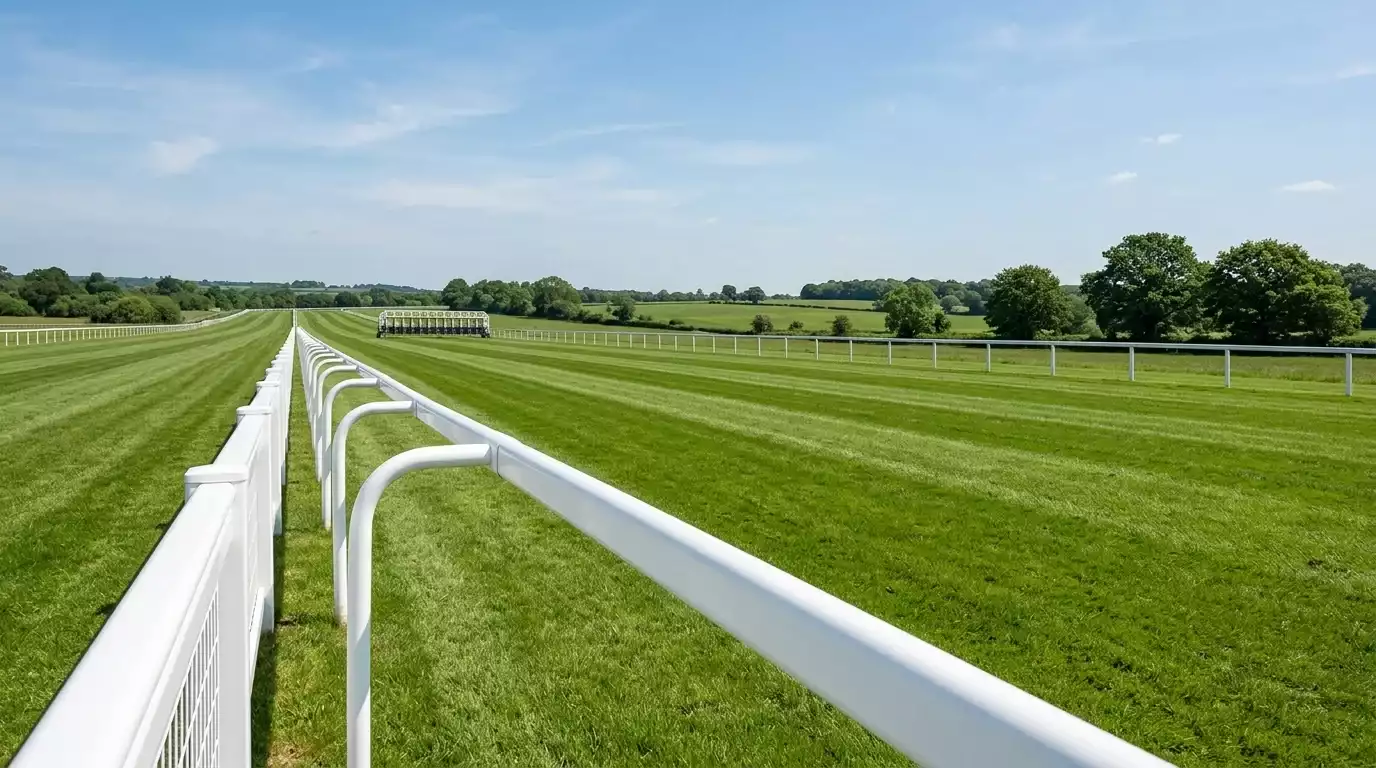
Ascot has two distinct racing surfaces – the round mile (the round course) and the straight (Old Mile and Straight Mile). They produce different draw biases, and getting them confused is one of the easier ways to lose money at the festival.
On the round course, low draws are usually preferred over five and six furlongs because the early part of the race involves a turn into the home straight. Horses drawn low can save ground around the inside; horses drawn high have to cover more distance. The bias is consistent over short trips and gradually evens out at a mile.
On the straight course, the situation depends on the ground. On good or fast going, the draw is largely irrelevant – the straight is wide enough that horses race across the full width without preference. On softer going, the stands’ side rail can be either the fastest or the slowest part of the track depending on weather, watering and the specific year. Reading the early races to identify which side is producing the winners is one of the basic Royal Ascot disciplines, particularly for the Wokingham and the Hunt Cup, where 30-runner fields are split into two visible groups during the running.
Extra places and how operators compete
Royal Ascot is a place-terms battleground. The big handicaps – Britannia, Royal Hunt Cup, Wokingham, Buckingham Palace, Ascot Stakes – produce some of the most generous extra-places offers of the racing year. 6 places, 7 places, 8 places are not unusual at the very largest fields.
The catch is that extra places usually come with reduced place fractions. A bookmaker paying 6 places at 1/5 odds is often offering less in absolute terms than a bookmaker paying 5 places at 1/4 odds, depending on the specific runners and their prices. Working out which set of terms produces the best return requires the kind of arithmetic that disciplined punters do and casual punters do not.
The 1/4-odds place fraction is the standard on handicaps; 1/5-odds is standard on non-handicap conditions races. Extra places promotions sometimes reduce 1/4 to 1/5 in exchange for adding places. Other promotions keep 1/4 and simply extend the number of places paid. The variation across bookmakers and across individual races within a meeting can produce material differences in expected return.
Explore our full range of betting strategies at Bets Horse Racing.
54,984 a day – what that means for betting volume
The 54,984 daily attendance figure does not translate directly into betting volume, but it correlates strongly. Each on-course punter places multiple bets across the day. The volumes also drive media attention – the BBC, ITV and major newspapers all run extensive Royal Ascot coverage that brings off-course casual punters into the markets.
The result is that Royal Ascot betting volumes rival Cheltenham week. The total UK racing attendance in 2025 of 5,031,640 – the first time over five million since 2019 – was driven partly by Royal Ascot’s continued growth. Royal Ascot’s contribution to British racing’s commercial health is enormous, and the betting market knows it.
For broader context on how attendance and betting interact across the calendar, the attendance and audience analysis covers the wider trends.
Five-day bankroll planning
The same staking discipline that applies to Cheltenham applies to Royal Ascot, with one important difference. Royal Ascot stretches five days instead of four, and the daily card is denser – eight races per day at Ascot compared to seven at Cheltenham. Roughly 35 races over five days, more than Cheltenham’s 28 over four.
I divide my Royal Ascot bankroll into Group 1 stakes, handicap stakes, and a reserve pot. Group 1 stakes are larger because the form is more reliable. Handicap stakes are smaller because the variance is wider. The reserve covers any value that emerges unexpectedly during the meeting – a horse withdrawn that I had backed in another race, a sudden ground change that opens up a new opportunity, an ante-post position I want to top up.
The discipline matters because Royal Ascot, like Cheltenham, encourages chasing. The atmosphere, the dress code, the champagne, the friends in marquees – all of it pushes you toward bigger bets than you originally planned. Sticking to a pre-set bankroll is the only way to enjoy the meeting and come away financially intact.
Common questions about Royal Ascot betting
When does Royal Ascot 2026 run?
Royal Ascot 2026 runs from Tuesday 16 June through Saturday 20 June, following the traditional third week of June pattern. Each day is themed differently with the standard schedule of seven to eight races. Gold Cup day falls on Thursday 18 June 2026.
How many places do bookmakers typically pay at Ascot?
The standard is 1/4 odds at 3 places for fields of 8 or more runners. Handicaps with 16+ runners commonly see extra places offers – 4, 5, 6 or even 7 places paid, often at 1/5 odds instead of 1/4. The most generous extra-places terms appear on the very largest handicaps like the Wokingham and the Hunt Cup.
Does the dress code affect on-course betting?
The dress code does not affect betting facilities directly, but the Royal Enclosure and Queen Anne Enclosure both restrict mobile phone use during racing in some areas, so on-course punters using betting apps may need to step out of those enclosures briefly to place a wager. Tattersalls and the Heath Enclosure have no such restriction.
Prepared by the Bets Horse Racing editorial staff.