Draw Bias in UK Flat Racing: Stall Numbers and Edge
 Available in US
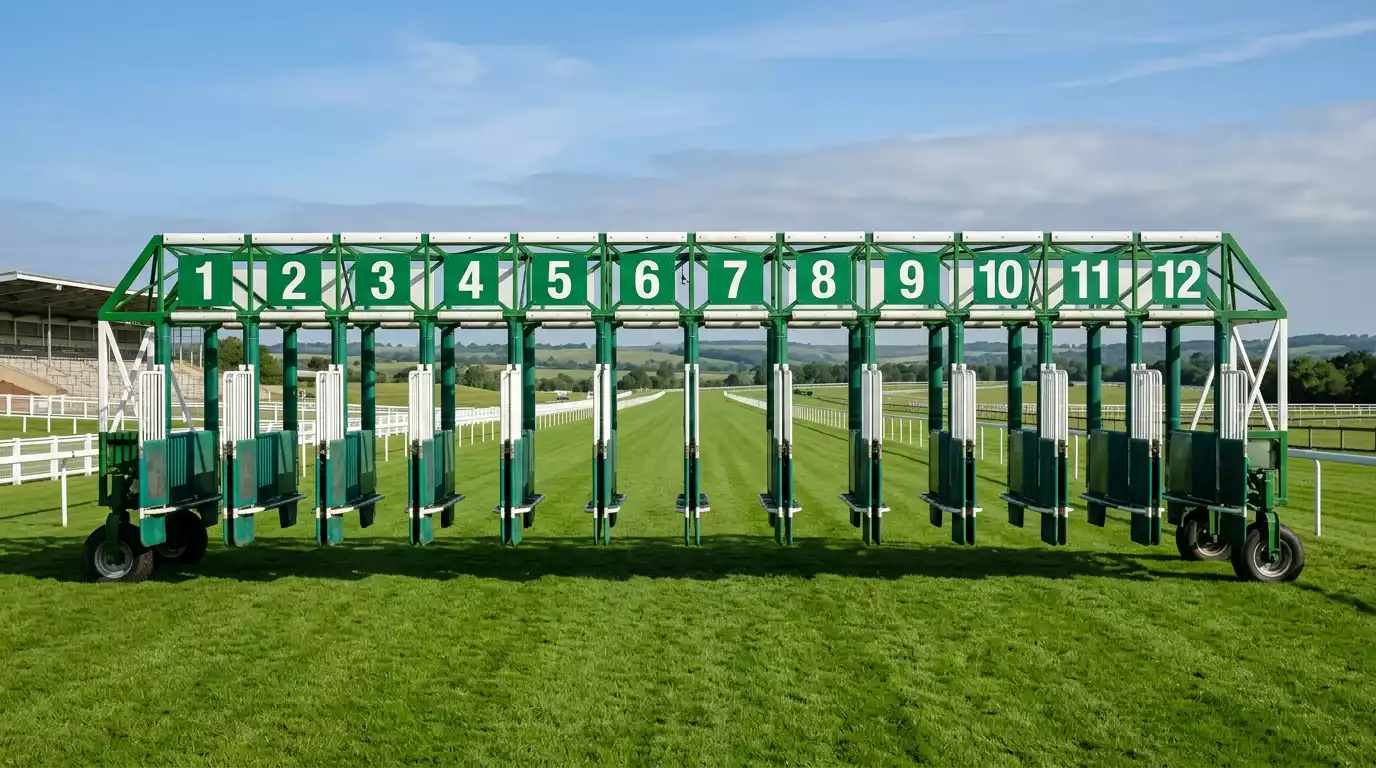
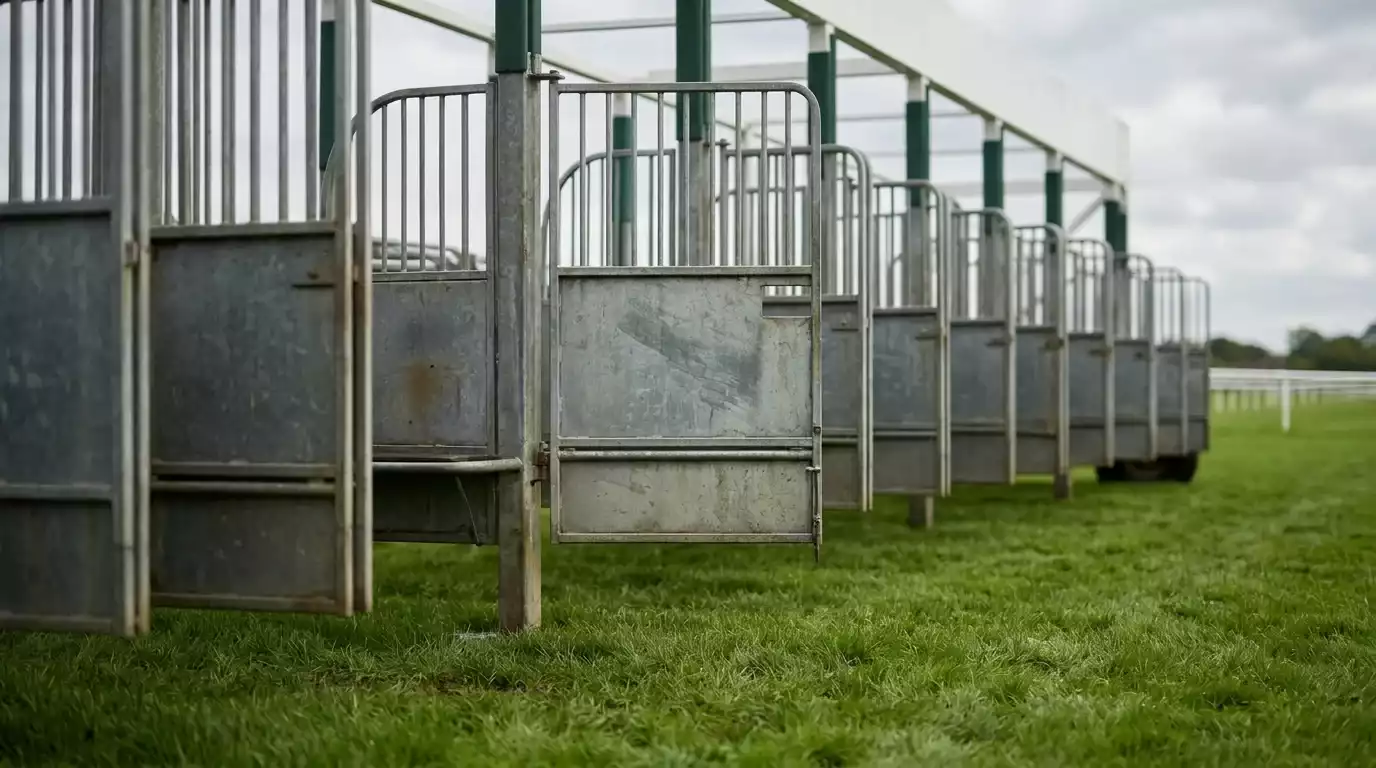
I once watched a Chester sprint over five furlongs where the top three home were drawn 1, 2 and 3. The favourite, drawn 13, finished eighth. The post-race comments from his jockey were brutal – “couldn’t get there from where we were drawn, was beaten before halfway.” Chester does that. So does Beverley, Brighton, Goodwood on soft, and a handful of other British flat tracks where the stall number on the racecard predicts the finishing position better than the official rating. Draw bias is the single most under-priced variable on a flat racecard, and missing it is the punter’s mistake, not the horse’s.
Stall Number Probabilities and Flat Racing Draw Bias Data
The numbers are stark. Statistical work on five-furlong races at Chester over the past two decades suggests stalls 1-3 win at roughly twice the rate that stalls 10-12 do. At Beverley over the same trip, low stalls again dominate. At Goodwood on soft ground over the same distance, the inside is often nearly unwinnable. A horse drawn 13 in a 14-runner sprint at Chester carries an effective handicap that no OR adjustment captures.
That effective handicap is not always obvious. Bookmakers know about draw bias and price it into the early markets, but the pricing is rarely perfect. Casual punters back horses on form figures and ignore the draw, which means the prices on widely-drawn horses are often shorter than they should be – and the prices on well-drawn horses sometimes longer. The opportunity is in the gap between what the market prices in and what the bias actually delivers.
Track shape, going and pace
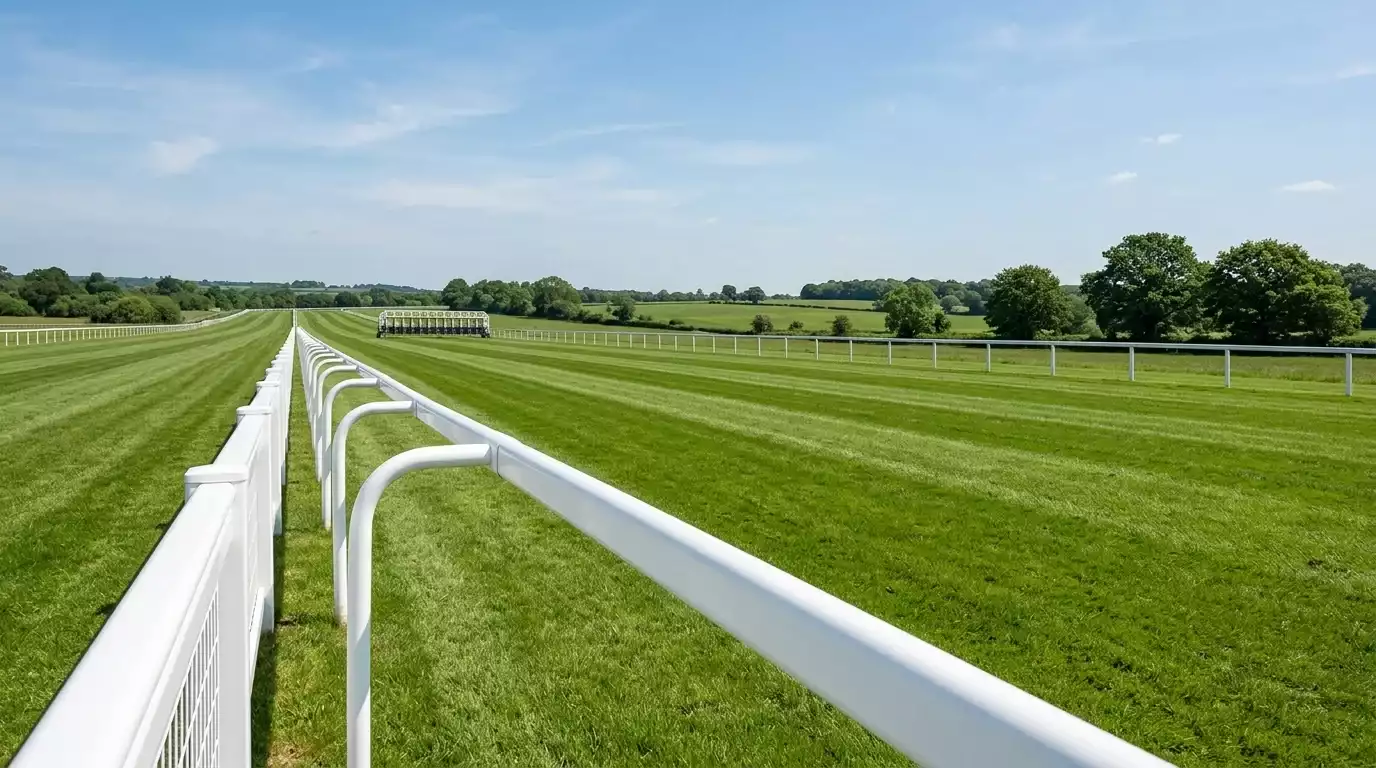
Bias exists because of three structural factors. First, the shape of the track – most British flat tracks have at least one bend, and the bend creates an inside-rail advantage for horses able to take a tighter line. Second, the going – softer ground often produces ground that races faster on one side of the track than the other, because of drainage, traffic patterns and rail movements between meetings. Third, pace – if a race has only one or two front-runners and they happen to be drawn together, the bias is amplified.
The interaction of these three factors is what produces the strong biases at specific tracks. Chester’s bias is geometric – the track is a tight, more-or-less circular mile with very little straight running. Goodwood’s bias is more situational – depending on the watering pattern and the weather, the strip near the stands rail or the strip in the middle can be the fastest. Newmarket’s two courses (the Rowley Mile and the July Course) have different bias profiles entirely, with the July Course almost bias-free and the Rowley Mile favouring high draws on soft ground over the straight mile.
Reading the bias on the day requires watching the early races. If the first two races on the card both finish with horses drawn high in the top three, the bias is high; if both finish with low draws, the bias is low. Adjusting bet selections accordingly is one of the basic flat-racing disciplines.
Top bias tracks
Chester is the strongest draw-bias track in Britain. Five and six furlong races at Chester reward low draws so consistently that the market sometimes prices a horse drawn 1-3 below its form-line-implied price. Beverley is similar – the five furlong start is on a bend, and the inside rail is heavily favoured. Pontefract has a bias that varies with ground; on faster ground, high draws are sometimes preferred over middle trips because of the camber of the track.
Goodwood’s bias is the most famous and the most variable. The straight five and six furlongs run downhill, and the surface near the stands rail is often the firmest. Depending on watering and weather, the bias can favour either the stands rail or the centre of the track. The two-yard width difference between the rail and the middle can be the difference between winning by a length and finishing fourth.
Ascot, Newmarket’s Rowley Mile, Sandown, Doncaster and Newbury are flatter tracks with relatively weak biases overall. They are not bias-free – soft ground at Newmarket over the straight mile typically produces a stands’ side bias – but the bias does not dominate the racing in the way Chester’s does.
Bias by distance
Bias varies dramatically by trip. The strongest biases are at five furlongs, where horses break from the stalls and race almost immediately into a turn or into a specific strip of the track. At six furlongs, the bias usually weakens as horses have more time to reach the inside rail. At seven furlongs and a mile, bias is usually marginal except in extreme cases. At a mile and a half and beyond, bias is usually negligible – the race is too long for the early disadvantage to matter.
Sprint trips are where draw bias pays the bills for disciplined punters. A 14-runner five-furlong handicap at Beverley with a soft going and a clear bias toward stalls 1-4 produces a measurable, repeatable edge. The longer trips are where casual punters lose money assuming a bias exists when it does not, or chase a bias that has weakened.
Building bias into your selection process
“Unlike other popular racing festivals, the Grand National appeals to ‘once-a-year’ punters, which highlights why 51% of UK adults who are planning to bet on the Grand National say they pick their horse by name, 36% by gut feeling and 14% by colour,” is how Richard Marsh of OLBG describes one slice of the casual market. Casual punters use names, colours and feelings; disciplined punters use stall numbers, ground readings and pace maps. The 21,728 horses in training in Britain in 2025 are competing in races where roughly 1,460 fixtures spread across 59 racecourses produce wildly different draw situations, and any punter wanting an edge has to track which tracks at which trips on which going actually exhibit bias.
The practical process is straightforward. Identify the meeting and the track. Check the trip. Check the going. Look at the previous three or four meetings at the same track to see whether high or low draws have dominated. Cross-reference the draw against the form. If a horse with strong form is drawn against the bias and another horse with marginal form is drawn with the bias, the marginally-formed horse with the right draw is often the better bet, because the market has not yet priced the bias.
For broader context on the structural factors that shape flat racing form, the racecard walkthrough covers how draw integrates with the rest of the form line.
Common questions about draw bias
Is there draw bias at Newmarket?
Newmarket has two courses. The July Course is almost bias-free across all trips and conditions. The Rowley Mile shows a stands-side bias on soft going over the straight mile and a milder bias on good going. Group races at Newmarket are usually treated as bias-free for handicapping purposes, though high-draw horses on soft ground sometimes carry an underpriced advantage.
Do bookmakers factor draw bias into their early prices?
Yes, but imperfectly. Bookmaker traders are aware of the biases at bias-heavy tracks like Chester, Beverley and Goodwood, and prices on poorly-drawn horses are usually shortened to reflect the disadvantage. The pricing is rarely precise enough to eliminate all value, and on Premier Fixture cards where market scrutiny is high the bias is more accurately priced than on Core Fixtures.
Does draw bias matter in jumps racing?
Almost never. Jumps races are run over much longer distances than flat sprints, and horses jump fences rather than break from stalls. The draw on a jumps racecard is technically the stall number for the start but it has no meaningful effect on the race because the horses are not pinned to a specific strip of the track. Draw bias is a flat-racing phenomenon.
Published by the Bets Horse Racing team.