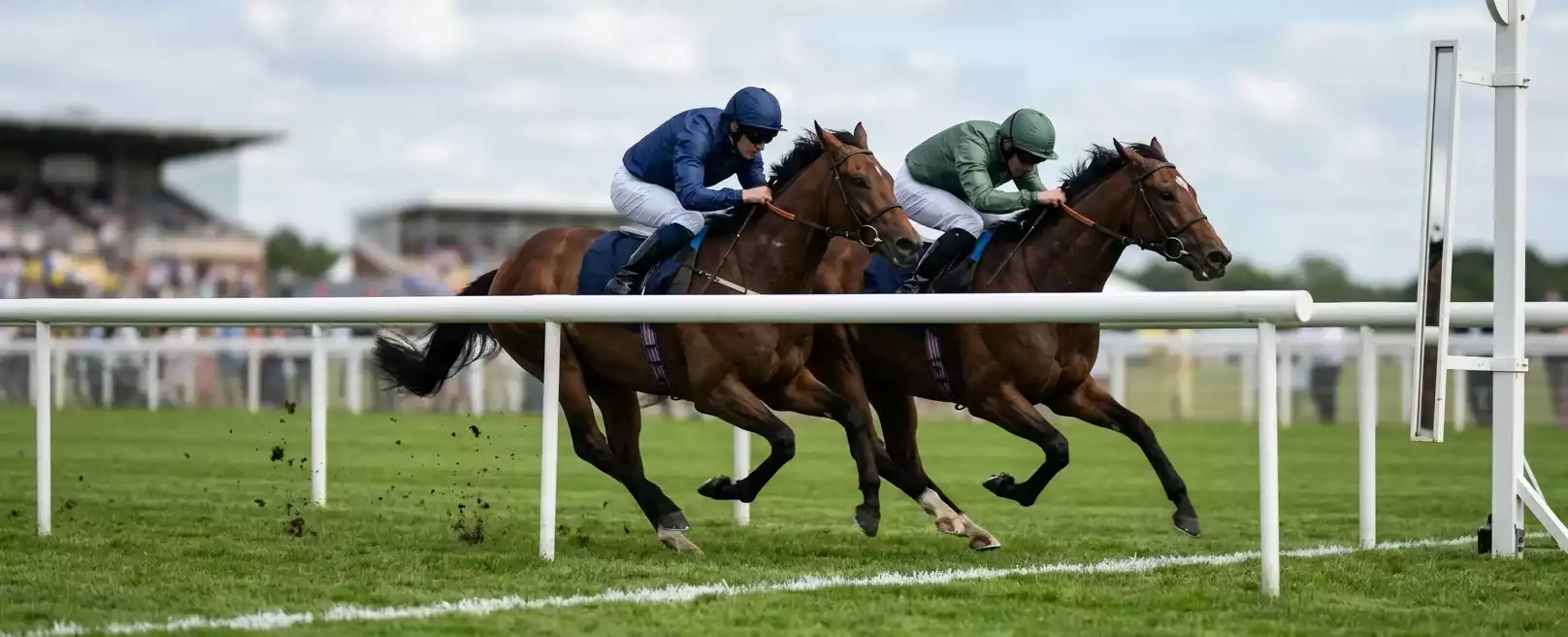
In-Running Betting on UK Horse Racing: Markets That Move at 50mph
 Available in US
Table of Contents
- A market that prices the next ten seconds
- The bookmaker side vs the exchange side
- What the in-running market gets wrong
- The five-second delay and why it matters
- Cash-out and the modern in-running product
- The risk of in-running for casual punters
- How to learn in-running without losing your bankroll
- Questions punters ask about in-running
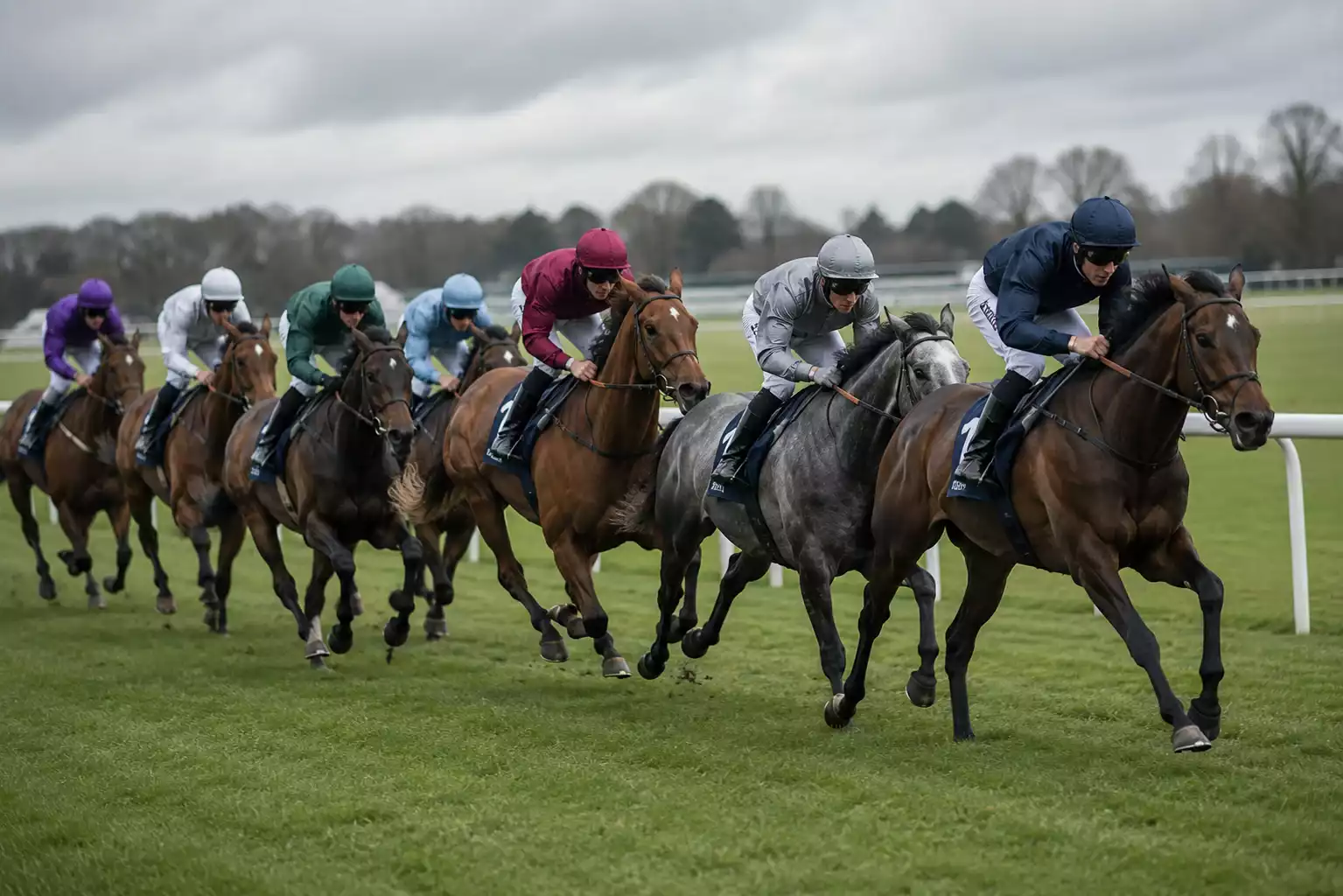
The first time I traded a race in-running properly, I made £18 on a horse that finished sixth. That sentence sums up most of what is strange about in-running betting on horse racing. You can be wrong about who wins, right about how the race develops, and still walk away with a profit. The market is not pricing the result. It is pricing the journey.
A market that prices the next ten seconds
In-running betting is the live market that opens when the race starts and closes when it finishes. Prices update second by second as the field plays out, and the bookmakers and exchange traders adjust based on what they see – the position of the leaders, the gallop pace, the body language of the field, the location of the favourites. It is the only market in UK racing where the price you see at any given moment reflects what is happening on the track right now rather than what someone predicted hours earlier.
The mechanics are simple. The market reopens with new prices as soon as the off is called. The bookmakers or the exchange book traders adjust prices as the race develops, with horses making moves shortening and horses falling out lengthening. Punters can back or lay at any moment until the race finishes or the operator closes the market. On the exchange, the prices are determined by the matched volume between backers and layers in real time.
The bookmaker side vs the exchange side
In-running betting works very differently on traditional bookmaker sites compared to on the betting exchanges. Bookmakers offer in-play odds with built-in margin – typically 4-8% overround across the win market – and a delay of several seconds between price publication and bet acceptance. The delay protects them from arbitrage on horses making obvious moves. Punters get a market that is broadly accurate but offers little genuine value because the operator’s margin and the latency lock out the moves that would otherwise pay.
The exchange side is where in-running betting lives in its truest form. The exchange is a peer-to-peer market – punters back or lay each other directly, with the operator taking a commission on net winnings rather than a built-in overround. Prices reflect what people are willing to back and lay at, and the matched market in major races runs through millions of pounds per minute during the actual running. The Betfair Exchange’s Boxing Day King George VI Chase market ran £13,031,239 in 2023 and £11,216,744 in 2024 – most of that volume matched in the four minutes of the race itself.
The trade-off is liquidity. Exchange in-running depth is strong on flagship races and thin on midweek meetings. A Tuesday afternoon all-weather sprint at Newcastle might match only a few thousand pounds in-running, which means significant slippage on any bet bigger than £100. A Saturday handicap at York might match six figures, with much tighter spreads and reliable execution.
What the in-running market gets wrong
The exploitable inefficiencies in in-running markets are usually about pace rather than position. A front-running horse that takes the field along at a strong gallop on heavy ground will frequently be priced shorter than its actual probability of holding on, because the early lead looks decisive. Stayers who like to come from behind get drifted in-running before they begin their move, because the market over-weights current position. Patient punters who know the form-running style of the contenders can lay the leader at unsustainable prices and back the closer at value before the pace adjusts.
The other classic inefficiency is the in-running drift on horses that have started slowly. A horse that gets squeezed out of the gate at the start of a 5f sprint can lengthen from 6/1 to 33/1 in three seconds. If that horse is well-handicapped and the trip is short enough that it can still finish into the placings, the value is real – particularly on each-way markets where the place portion may still pay out even from a slow start.
Ground reading matters more in-running than at any other point in the betting cycle. Horses moving smoothly on the rail in heavy going often get backed too short in-running because they look comfortable. Horses being pushed along to keep up on good ground often get drifted too far because they look in trouble. The truth tends to sit between the market’s reading and the punter’s gut, and the punters who profit are the ones who watch enough races to spot the difference between a horse genuinely in trouble and a horse just being asked.
The five-second delay and why it matters
UK exchanges build in a deliberate delay between bet placement and bet matching during in-running, usually around five seconds. The delay exists to protect against latency arbitrage – punters with faster video feeds or trackside access who could otherwise exploit information advantages over the rest of the market. Without the delay, anyone with a satellite feed would have a meaningful edge over punters watching the broadcast stream which is typically four to seven seconds behind the live action.
The delay is invisible to most punters but matters enormously for serious in-running traders. A back bet placed in-running enters a queue, and the matching happens five seconds later. If the price has moved during that window, the bet only matches at the new price or doesn’t match at all. The practical consequence is that you cannot reliably “snipe” a price moments before a key moment in the race – the market will catch up before your bet hits.
What you can do is identify horses likely to make a move and back them slightly before the move becomes obvious. The skill is reading the field, the pace and the riding style well enough to anticipate which horse will quicken in the final two furlongs. Get that right consistently and the in-running market pays. Get it wrong and the bet hits at a price that no longer reflects value.
Cash-out and the modern in-running product
Most major UK bookmakers now offer a cash-out feature that lets punters close their position during the running. The cash-out price is calculated from the current in-running odds and accounts for the bookmaker’s margin in both directions. For a single-horse win bet, cash-out shows you what you would receive if you took your money off the table now rather than waiting for the result.
The maths is straightforward but the framing is often misleading. A punter who backed a horse at 5/1 and sees it leading two furlongs out might be offered a cash-out of 3/1 – locking in a profit on the current state of the race. That sounds attractive. But the cash-out price already includes the bookmaker’s margin, so the lock-in is worse than the matched-exchange equivalent would be. Punters who use cash-out frequently are accepting a structural haircut on every transaction.
The exchange equivalent – laying off the bet to lock in profit – is a cleaner version of the same strategy. Lay your winner at the in-running price equivalent to your back stake and you have hedged out, with only the exchange commission to pay rather than the bookmaker’s overround. For punters comfortable with the exchange interface, this is a meaningfully better way to manage in-running positions than relying on cash-out buttons.
The risk of in-running for casual punters
In-running betting is, statistically, where casual punters lose the most money on horse racing. The combination of fast-moving prices, sentiment-driven betting on horses that “look good”, and the cash-out trap produces consistent erosion of bankrolls. The bookmakers built the in-running product around the fact that watching a race live makes people more confident in their reading of the action than the action actually justifies.
The behavioural pattern is well-documented. Punter watches a horse make an early move, becomes convinced the horse will win, backs it in-running at 2/1, watches the horse fade in the final furlong, loses the stake. The race-watching experience felt informational. The information was actually mostly noise. The same punter, asked before the race to back the same horse at 2/1, would have refused because the pre-race form did not justify the price.
For punters who want to engage with in-running markets without losing systematically, the rule is the same as for any betting market. Have a view before the race. Bet only when the in-running price represents a meaningful deviation from your pre-race view. Avoid trading horses you didn’t already have an opinion on. And accept that the in-running market is structurally optimised for the bookmaker or the exchange operator, not for the casual punter, and any edge you find has to be defended against rapid market correction.
How to learn in-running without losing your bankroll
The honest answer to “how do you get good at in-running betting” is that you spend a lot of time watching races without betting on them. Watch the pace. Watch the favourites move. Watch the body language of the jockeys. Watch what the in-running price does in response to each move. Build a mental model of which horses’ moves the market over-reacts to and which it under-reacts to. The cost of this learning, if you do it properly, is your time rather than your money.
The other piece of advice is to specialise. The in-running market behaves differently on a 5f sprint, a 1m4f Derby trial, a 3m chase and a 2m hurdle. The pace dynamics, the riding patterns and the market response are all distinct. Pick one or two trips you like and learn them deeply. Trying to trade every race across a card is the route to bankruptcy. Trading two well-chosen races a day, with proper preparation and a clear pre-race view, is a sustainable approach.
For the broader context on how the exchange model works alongside traditional bookmakers, the betting exchange guide covers the structural differences in more detail.
Questions punters ask about in-running
Can I bet in-running on every UK race?
Most UK-licensed bookmakers and the major exchanges offer in-running markets on the vast majority of British racing fixtures. Coverage is strongest on Premier Fixtures and weakest on smaller midweek meetings where liquidity is thinner. Some operators close in-running markets for races they consider too short to price reliably.
Why is there a delay between placing an in-running bet and it being matched?
UK exchanges build a deliberate latency of around five seconds between bet placement and matching to protect against arbitrage from punters with faster video feeds or trackside access. The delay means in-running bets cannot reliably exploit short-term information advantages and must instead anticipate the market by a meaningful margin.
Is cash-out the same as laying off on the exchange?
Both achieve the same goal of hedging a live position, but cash-out includes the bookmaker’s built-in margin in both directions, while laying off on the exchange charges only the standard commission on net winnings. For comparable hedging, laying on the exchange is structurally better value than using a bookmaker’s cash-out button.
Published by the Bets Horse Racing team.